White Label CMS for Agencies: A Buyer's Guide
Most white label CMS advice starts with branding and ends with a dashboard screenshot. That's the wrong way to buy one. Agencies and integrators don't lose margin because a login screen isn't branded enough, they lose margin because they inherit patching, tenant risk, migration drag, and a platform they can't govern.
WebinOne treats the decision as an operating model question. That matters, because the boundary is not the admin theme, it's who controls hosting, permissions, scaling, data, and the path from one client site to a managed portfolio. A white-label CMS only earns the name when the provider can run the platform under the partner's brand without passing hidden operational risk back to the agency.
Table of Contents
- What White Label CMS Actually Means in Practice
- Why Agencies and Enterprises Are Replatforming Now
- Core Features That Decide the Buying Decision
- Security and Compliance as Architecture, Not Badges
- Migration as an Operational Risk Procedure
- Multi-Site Governance at Portfolio Scale
- AI Inside a White Label CMS Without Losing Control
- Evaluation Checklist and the Next Step for the Reader
What White Label CMS Actually Means in Practice
A white label CMS isn't just a branded login. WebinOne is a managed white-label DXP, and that distinction matters because the buyer is really choosing who owns the operational surface, not just the interface surface.
Three layers get bundled together too often
The brand surface is what clients see, admin labels, login screens, support emails, and domains. The operational surface is the part that burns time, hosting, patching, security, scaling, backups, and integrations. The contractual surface decides who owns the SLA, the data, and the roadmap.
Only the contractual layer settles the buying decision. If a platform lets an agency put its logo on the admin but leaves the hard parts untouched, that's not real white-label depth, it's cosmetic resale. WebinOne's model is the opposite, it consolidates CMS, ecommerce, CRM, email, multi-site management, and a headless API into one managed system, so the partner can deliver under its own brand without stitching together separate vendors.
A good shorthand comes from comparing web tech stacks, not just product banners. The article devPulse compares web tech stacks is useful because it helps teams separate surface claims from the actual stack they'll have to run.
Practical rule: if the vendor can't explain tenant separation, permissions, migration, and support ownership in plain terms, the “white label” label doesn't mean much.
The true test is whether the platform can support portfolio work, not one-off site builds. That's why buyers should look for managed operations, governance, and multi-site controls first, then brand customisation second.
WebinOne's white-label software overview makes that same point from a product angle, but the buying logic is operational. If the platform doesn't let the partner own the experience end to end, it's not solving the agency's problem.

Why Agencies and Enterprises Are Replatforming Now
The market is shifting because fragmented stacks are expensive to carry. WebinOne gives agencies one managed operating layer instead of a pile of separate systems to babysit.
The installed base is large, but the maintenance burden is larger
CMS adoption is concentrated around a few major platforms, with the leading open-source system used by 39.7% of all websites surveyed and 58.5% of sites with a known CMS, while other hosted builders and open-source systems hold smaller shares of the known-CMS market (W3Techs). That concentration matters for agencies because it creates a steady flow of inherited sites, migrations, and cleanup work.
The maintenance side is the drag. The 2024 Open Source Security and Risk Analysis report found that 84% of assessed codebases contained at least one known vulnerability, and 91% included components that were at least ten versions behind the current release (Aqua Security). That is the day-to-day reality of open-source upkeep. Every site has its own patches, dependencies, and upgrade timing.
For example, a 20-site portfolio where each site averages 2 hours of monthly plugin and patch work equals 480 non-billable hours per year before rescue work.
Operational takeaway: the issue is not whether open-source works. The issue is whether a team wants every client site to stay a maintenance project forever.
Consolidation is a margin decision
Agencies outgrow fragmented stacks fast. Patching, plugin upkeep, and rescue work start eating time that should be spent on strategy, delivery, and client growth.
A managed white-label platform moves those hours into recurring services, governance, hosting, and support. That is where margin improves, because the agency stops paying the hidden tax of one-off fixes across every site in the portfolio.
WebinOne fits that consolidation play because it is built for multi-site delivery, managed operations, and portfolio-level control. For agencies that have already hit the ceiling on site-builder economics, that is the move that changes the business, not just the CMS.
Core Features That Decide the Buying Decision
WebinOne should be judged by what it removes from the agency's workload, not by how many boxes it ticks in a demo. The features that matter are the ones that create recurring revenue or eliminate operational hours per site.
CMS depth has to support real delivery
A usable white-label CMS needs more than page editing. WebinOne ships with Liquid templating, custom modules, SEO, forms, snippets, blog, search, and member areas, so teams can build structured experiences without falling back on a pile of add-ons.
That matters because native capability changes the support model. When the core platform carries the work, there's less dependency on patching third-party extensions every time the site changes. Agencies don't need more surface area, they need fewer moving parts.
Commerce and customer data should live inside the same operating model
If ecommerce sits outside the content platform, the agency ends up managing two systems and two support paths. WebinOne includes catalog, orders, payments, and a built-in CRM with cases, contacts, custom fields, and member activity tracking, all inside the same managed system.
Zero transaction fees on ecommerce are part of the commercial model as well, and that matters for resellers who want predictable delivery economics. The right setup lets the agency package support, content, and commerce together instead of treating each site as a one-off implementation.
Multi-site and headless reach decide scale
The multi-site console is where a white-label platform stops being a site editor and becomes an operating layer. WebinOne lets partners manage sites, staff, billing, branding, and support tickets under their own brand from one place.
It also includes 300+ APIs and webhooks for headless delivery, which means content and commerce can serve any front end or channel. That's the kind of flexibility agencies need when they're building portfolios, not isolated pages.

A platform is only “white-label” in a useful sense when the partner can standardise delivery without adding support overhead every time a new client comes on board.
Security and Compliance as Architecture, Not Badges
WebinOne has to be evaluated on how it isolates tenants and governs identity, not on decorative trust badges. Shared branding doesn't matter if the architecture can't keep one tenant out of another tenant's data.
Tenant isolation is a design requirement
AWS recommends validating tenant context across all architectural layers so every request is checked against the active tenant, especially in shared-infrastructure SaaS. That guidance is there for a reason, a missed authorization condition can expose content, users, media, orders, or configuration across tenants. For a multi-brand white-label CMS, that's the failure mode that matters most.
The practical test is simple. Tenant identity should be bound to authenticated claims, passed in signed tokens, and enforced at data-access and service boundaries, not just at the front end. That protection has to extend across records, file storage, caches, search indexes, API keys, webhooks, background jobs, and admin actions.
For teams that want a deeper operating checklist, the piece on compliance checkbox vs real security testing is a useful reminder that badges don't stop bad architecture.
Identity needs zero-trust discipline
NIST's zero-trust model treats access as a continuous decision based on subject, resource, and policy, with authentication and authorization kept separate. That's the right lens for a white-label CMS, because a shared super-admin account is a single point of failure.
WebinOne's operational posture should include role-based or attribute-based permissions, SSO, MFA, short-lived credentials, separation of duties, and immutable audit logs. For agency buyers, that means editors can publish without touching billing, production code, or template governance. For enterprise teams, it means access reviews and forensic analysis have an evidence trail they can trust.
Security rule: if the platform can't show tenant-specific negative-path testing, the risk isn't theoretical, it's waiting for a production incident.
WebinOne's AWS posture matters here too. It runs across six AWS regions, is an AWS Partner, has passed the AWS Foundational Technical Review, holds the AWS Qualified Software designation, is enrolled in the AWS Software and Services Paths, and is available on AWS Marketplace. For qualifying deployments, including AWS GovCloud, that gives partners a real basis for governance conversations instead of vague assurance.
Migration as an Operational Risk Procedure
A migration is not an export-import job. WebinOne treats it as a controlled operating change, because live publishing, commerce, SEO, and integrations all sit in the blast radius.
The sequence has to be deliberate
Start with dependency inventory and undocumented custom code. If a site has hidden forms, CRM connections, redirects, or stored content logic, the migration won't stay tidy for long.
Then map the business-critical surfaces, redirects, metadata, forms, orders, CRM records, and API consumers. Run the source and target in parallel, test representative templates and transactional workflows, and define rollback criteria before cutover. At the cutover point, freeze or reconcile writes, then monitor search visibility, errors, performance, and conversions after DNS changes.
The reason this level of procedure matters is simple. The 2025 DevOps Migration Index found that 77% of surveyed migration projects exceeded budget by more than 10%, 60% caused missed revenue opportunities, and 74% experienced more tool sprawl after migration (The 2025 DevOps Migration Index). That's why feature comparison is the wrong starting point.
Migrations fail when ownership is fuzzy
The operating question is who owns each integration when something breaks. That includes templates, data transforms, redirects, analytics, and approvals.
WebinOne's platform migration strategy article is useful background, but the practical point is bigger than one article. A good migration method reduces risk by making parallel-run, rollback, and post-cutover monitoring mandatory.
WebinOne's TeamOne migration work is built around that logic. It's the right model when the client portfolio includes rescues, not just clean starts.
Multi-Site Governance at Portfolio Scale
WebinOne matters when one console has to govern more than one brand. At that point, the test is whether the platform acts like a portfolio system, not a loose collection of separate sites.
NASA is the right kind of reference point
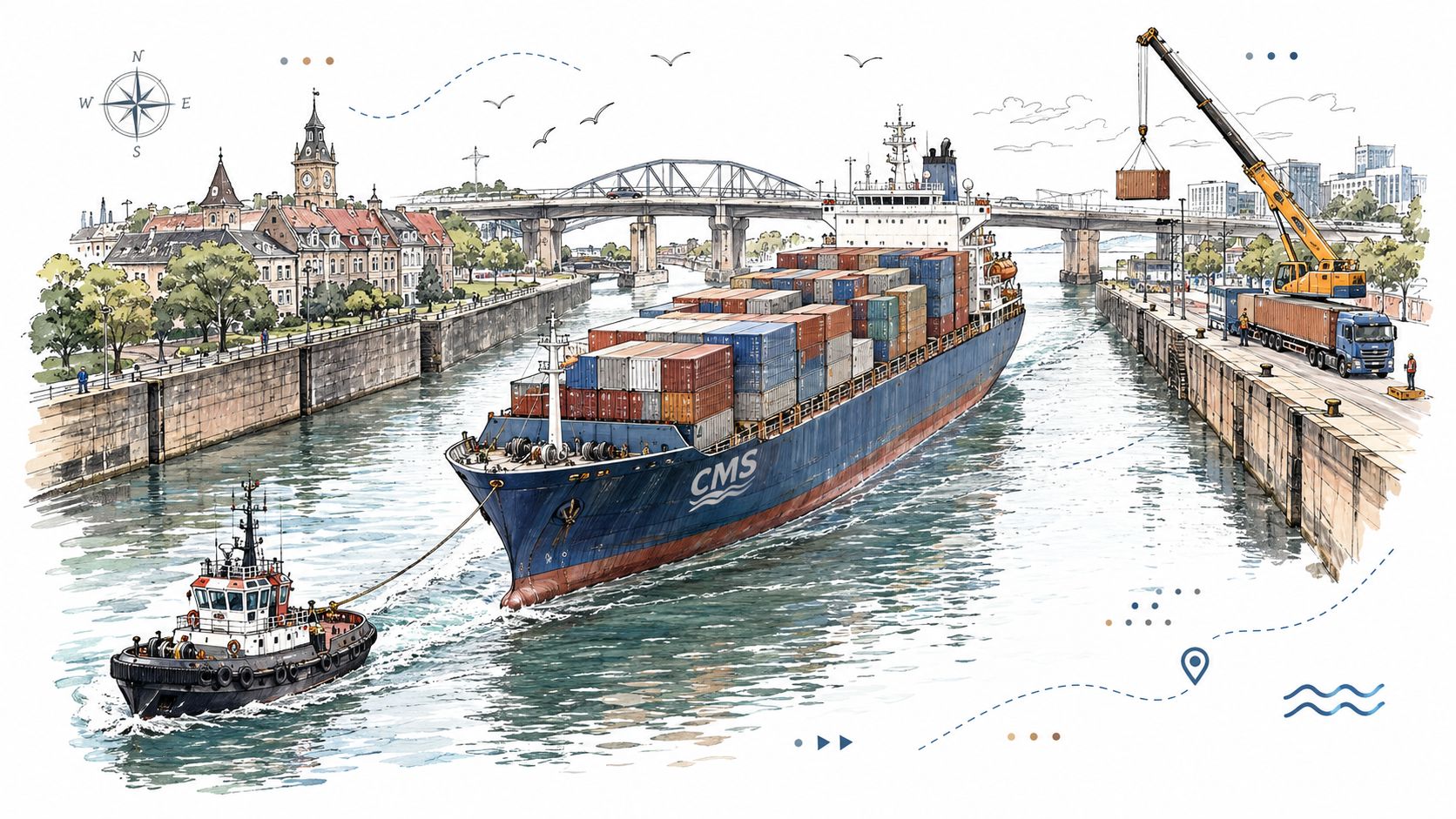
NASA's AWS-based enterprise CMS migration covered more than 250,000 pages and nearly 3 terabytes of content, relaunched nasa.gov and its subdomain components in 13 weeks, and did it without downtime or service interruption. The resulting model supported more than 30 content applications across seven NASA centers (NASA case study).
That is portfolio migration, not a single-site redesign. Shared infrastructure only works when governance, staged testing, and controlled cutover are built into the operating model. Agencies with multiple clients should treat that as the baseline.
Availability claims need architecture behind them
AWS Well-Architected guidance says the difference between 99.5% and 99.99% availability is more than 3.5 hours per month, and that four-nines generally requires multiple Availability Zones (AWS availability guidance). That is the right lens for a white-label CMS, because uptime without architecture is just a marketing line.
WebinOne's published 99.99% uptime over the last 12 months and 99.95% SLA commitment, across six AWS regions, only matter because they sit behind a deployment model built for portfolio operations. The questions are fault isolation, region choice, separate deploy scopes, per-brand roles, and per-site rollback so a failed release for Brand A cannot block publishing for Brand B.
Portfolio rule: once a platform manages many sites, the question changes from “can it publish?” to “can it fail without taking the whole portfolio with it?”
WebinOne's multi-site management overview belongs in this conversation, because portfolio governance only works when repeatability is part of the design.
AI Inside a White Label CMS Without Losing Control
AI is useful in a white-label CMS only when it's governed. WebinOne should be judged on whether AI can operate under partner control, not on whether it can generate pages fast.
The hard problem is change control, not content generation
The key question is who can change production content, templates, automations, or integrations across multiple client sites, and how the agency proves what happened afterward. Enterprise evidence shows that 70% of surveyed organizations said business leaders were pushing AI tools into development pipelines without appropriate security review, and 40% discovered new security blind spots after migration (CIODive).
That's why autonomous generation is the wrong target for most agencies. A faster system that can't be reviewed, rolled back, or scoped safely becomes another risk surface. Regulated, government, and multi-brand environments need the opposite, auditable changes with human approval thresholds.
Scoped AI is the useful model
WebinOne's AgentOne fits that model because it builds and operates sites inside the managed platform with scoped permissions, audit logs, versioned and reversible changes, and human approval thresholds. That matters more than raw generation speed, because partners need a system that can be explained to clients, audited after release, and rolled back if a change goes wrong.
The practical value is not that AI works everywhere. It's that AI can be confined to the parts of the workflow that are safe to automate, while the rest stays under governed control.
Projectify's note on preventing agent conflicts is relevant here because multi-agent systems only help when their permissions don't overlap in ways that create production chaos.

Evaluation Checklist and the Next Step for the Reader
A serious white label CMS should answer six questions cleanly. Tenant isolation, role-based access, multi-AZ or region-aware deployment, parallel-run migration, multi-site governance, and scoped AI with audit logs are the baseline. If the vendor can't show those controls with evidence, the platform is a liability with a nice demo.
WebinOne runs on AWS across six global regions, has passed the AWS Foundational Technical Review and holds the AWS Qualified Software designation, is available on AWS Marketplace, prices from $10 per month per site, charges zero transaction fees on ecommerce, measures 99.99% uptime over the last 12 months against a 99.95% SLA, and has migrated thousands of sites for partners in 16 countries including US and Australian government clients. Agencies should go to the WebinOne reseller program, and SIs, AWS partners, and enterprises should start a conversation with the WebinOne team about partnership or migration.