Website Replatforming Playbook: A Practical End-to-End Guide
A retailer can complete a CMS cutover, celebrate a clean deployment, and discover days later that organic landing pages have disappeared, checkout paths fail, editors can't publish, and nobody knows whether the old system can be restored. The migration technically finished. The business transformation didn't.
That failure usually starts before development. Teams treat content, integrations, search, accessibility, analytics, infrastructure, and operations as separate workstreams, then discover at launch that they're one coupled system. Website replatforming changes how revenue is created, how teams work, and how risk is controlled. It isn't a prettier deployment of the same business.
Table of Contents
- Why Replatforming Is a Program, Not a Project
- Pre-Migration Audit and Decision Criteria
- Choosing the Architecture and Migration Strategy
- Staged Migration, Cutover, and Rollback Discipline
- Preserving SEO, Accessibility, and Data Across the Cutover
- Operating Model, Roles, and Continuity After Launch
- Post-Launch Monitoring, Cost, and the Next Step
Why Replatforming Is a Program, Not a Project
WebinOne treats replatforming as an operating-model program, not a one-weekend technology swap. The platform matters, but ownership, acceptance criteria, migration waves, and post-launch operations determine whether the business improves.
A replatform combines software replacement, data migration, URL and information-architecture changes, integrations, testing, and organizational change. The long-running Standish Group CHAOS research is summarized as finding that only 31% of IT projects finish on time, within budget, and within scope, meaning approximately 69% miss at least one measure. Broader industry evidence also reports that 53% of CMS migration initiatives exceed budget, miss deadlines, or fail to deliver expected outcomes, as summarized by FocusReactive's CMS migration research.
The lesson is practical. A platform migration needs the same governance as any business-critical transformation.
Five phases create control
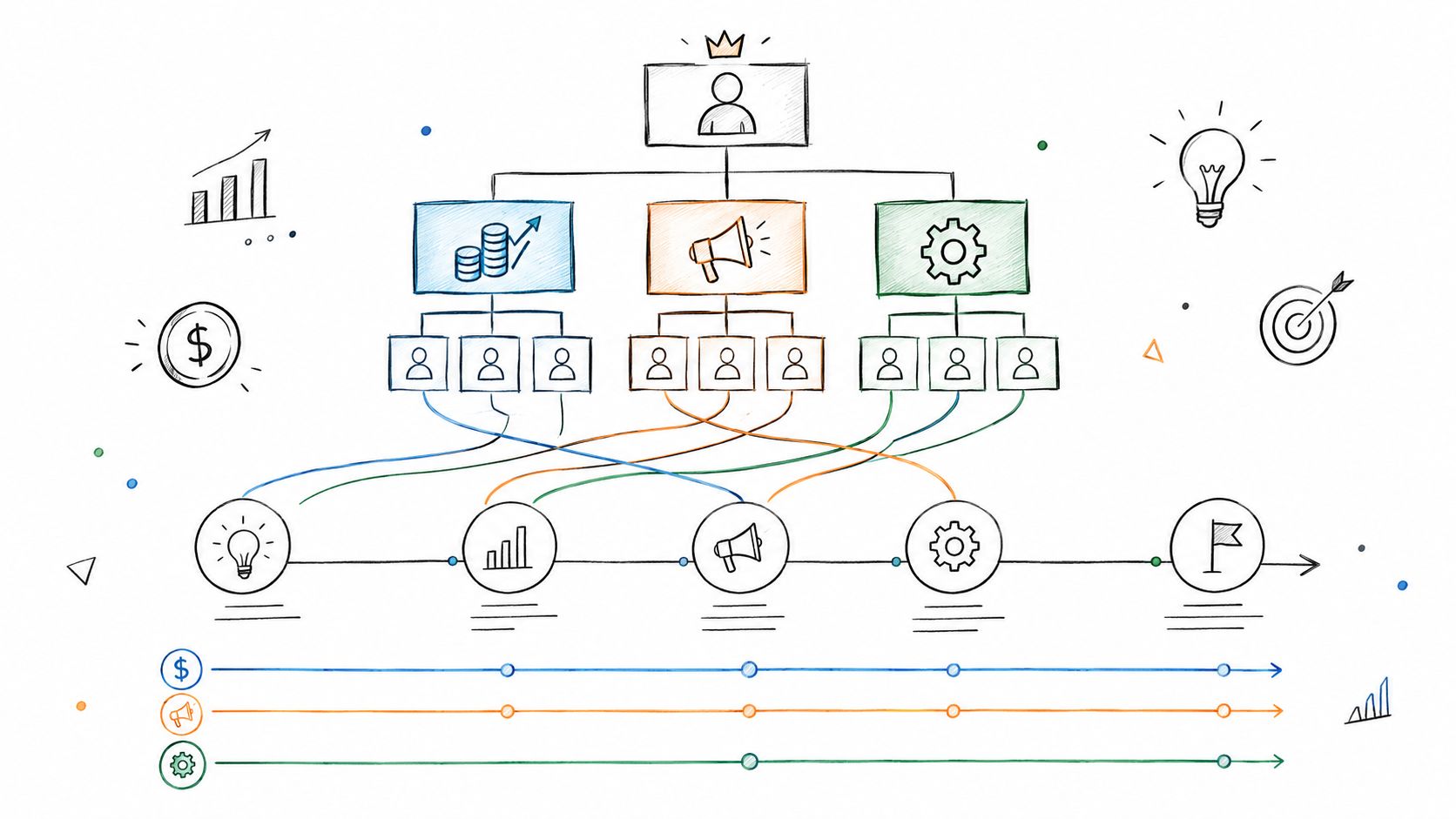
A disciplined program follows five connected phases:
- Audit and decision criteria: Establish what exists, what creates value, and what must change before anyone selects an architecture.
- Architecture and migration strategy: Choose the operating model the organization can support after launch, then match the migration pattern to risk.
- Staged migration, cutover, and rollback: Move in controlled waves with explicit exit criteria, rehearsed rollback, and a recoverable legacy environment.
- SEO, accessibility, and data preservation: Treat search visibility, inclusive customer journeys, and data integrity as release conditions, not post-launch cleanup.
- Post-launch operations: Transfer ownership into a documented model with monitoring, support, governance, and an agreed optimization budget.
WebinOne can support agencies and systems integrators through staged migration, managed operations, multi-site governance, and headless delivery. Its TeamOne service handles migration planning, content transfer, functionality rebuilding, DNS transfer, SSL provisioning, and quality assurance. Agencies can also evaluate the WebinOne reseller program when the goal is to deliver managed client platforms under their own brand.
Operating rule: The launch date is a milestone. The deliverable is a platform the client can operate, recover, and improve.
The program needs one accountable owner, a decision log, a risk register, named workstream leads, and budget reserved for the first 90 days after go-live. Agencies that price only the build create avoidable margin pressure. SIs that stop at deployment leave the customer carrying the hardest operational risks.
Pre-Migration Audit and Decision Criteria
Lock the audit before the architecture. A migration team that cannot explain what will be kept, rebuilt, retired, or redirected is not ready to estimate the work or approve a target platform.
The audit must produce decision-ready artefacts rather than a slide deck built on assumptions. Content teams need a URL inventory, template catalogue, media register, structured-data inventory, and locale matrix. Commercial teams need the highest-value landing pages, conversion paths, checkout steps, and API-driven revenue flows. Technology teams need an integration map covering CRM, ERP, marketing automation, payments, tax, search, analytics, identity, scheduled jobs, and authentication.
Review operational debt at the same time. Record deployment practices, on-call coverage, hosting commitments, licensing renewal dates, undocumented automations, accessibility findings, credential ownership, and recovery procedures. If the current system relies on one person's memory, that dependency belongs in the migration scope.
Build the inventory that drives decisions
| Audit Dimension | Artefact to Produce | Decision It Feeds |
|---|---|---|
| Content | URL inventory, template map, media register, structured-data and locale inventory | Keep, refactor, rebuild, retire, or redirect |
| Traffic and revenue | Landing-page coverage, conversion-path map, checkout and API-flow register | Protect, redesign, test, or decommission |
| Integrations | Dependency map for business systems, identity, payments, search, analytics, and automation | Reconnect, replace, consolidate, or isolate |
| Operational debt | Deployment, support, hosting, licensing, accessibility, ownership, and recovery register | Retain, document, transfer, or eliminate |
Separate a platform limitation from a delivery problem. A dated template, weak ownership, or undocumented custom code does not automatically justify a new platform. Replatforming has a stronger case when the organization cannot model its content, control critical SEO fields, operate its integrations, or support key application journeys. Those failures affect continuity, accessibility, and recovery, not only technology choice.
Set go or no-go gates
Before approving the architecture, require 95% of revenue URLs mapped, every revenue-bearing integration re-contracted or assigned an approved replacement, an accessibility baseline measured, and stakeholder sign-off recorded. These are governance gates. Treating them as optional transfers discovery risk into implementation.
Define the minimum representative pilot before selecting the migration pattern. It should include complex templates, high-value journeys, localized content where relevant, structured data, forms, search, and at least one integration that has caused operational pain. A homepage-only proof of concept provides little evidence about delivery effort, accessibility preservation, or rollback cost.
Every major workstream in the estimate needs its assumptions beside it. The agency must state what happens to each template, redirect, data object, workflow, and integration. If those outcomes remain undefined, the estimate is incomplete, and the delivery team will absorb unpriced discovery during implementation. Record the unresolved decisions, assign owners, and price the work required to close them.
Choosing the Architecture and Migration Strategy
The right architecture depends on the customer's editorial model, application requirements, governance maturity, and ability to run the stack after launch. Treat the choice as an operating-model decision. The platform changes how teams publish, test, support, and recover the site.
Test each option against time to first value, total cost over 36 months, control of SEO and Core Web Vitals, editor autonomy, and the operational burden placed on the agency retainer. A faster build can create a larger support obligation if the team must maintain several front ends, deployment paths, and integration contracts.
Compare the operating models
| Architecture | Time to First Value | SEO and CWV Control | Editor Autonomy | Operational Burden | Best-Fit Migration Strategy |
|---|---|---|---|---|---|
| Managed monolithic platform | Usually faster when common capabilities are available natively | Strong when templates, caching, markup, and redirects are governed centrally | High when workflows and page editing are designed well | Lower platform-maintenance burden, but governance remains necessary | Staged waves or controlled cutover |
| Headless CMS with dedicated front end | Can be slower because the front end, preview, deployment, and integrations require coordinated delivery | High potential control, with more responsibility for rendering, performance, metadata, and testing | Depends on preview, publishing, and component design | Higher agency or SI burden across multiple systems | Strangler pattern or parallel run |
| Hybrid headless model | Moderate, because existing CMS processes can remain while selected experiences decouple | Flexible, but requires clear ownership of rendering and content contracts | Often preserves existing editorial workflows while adding complexity | Moderate to high, depending on the number of front ends | Strangler pattern with selective parallel operation |
A big-bang cutover fits only small catalogues with mature quality assurance and a simple dependency map. It offers a clean calendar, but forces every unresolved decision into one release gate. That concentrates technical, commercial, and recovery risk.
For enterprise replatforming, use a strangler pattern by default. Route selected journeys or templates to the new stack while the legacy system continues serving the rest. This approach turns architecture into a sequence of operating decisions, giving editors, support teams, and engineers evidence before the next wave.
Reserve a parallel run for regulated or high-revenue properties where reconciliation and operational proof matter more than speed. The cost is duplicated operation, content comparison, and support coverage. The benefit is stronger evidence that data, analytics, accessibility, and transaction flows remain reliable before retirement of the legacy experience.
Agencies assessing ecommerce delivery can use Helbling Digital Media's resource on upgrading a store with HDM to pressure-test assumptions about catalogues, customer data, integrations, and transaction flows.
Choose the architecture the team can run on day 365, not the one that demos best on day 30. WebinOne runs as a managed platform on AWS across 6 AWS regions. Qualifying systems integrators can discuss licensed deployments in their own or their customer's AWS account, including AWS GovCloud, by agreement. That hosting flexibility matters only if the customer has defined ownership, support coverage, release controls, and rollback responsibility after launch.
Staged Migration, Cutover, and Rollback Discipline
Define migration waves by risk, not page count. Low-traffic templates can prove the process, while account areas, checkout, search, forms, and revenue integrations should move only after content, performance, analytics, accessibility, and recovery work together in production-like conditions.
A staged migration keeps old and new experiences available behind one hostname where the architecture supports it. Edge rewrites, feature flags, content synchronization, redirect validation, and automated tests reduce dependence on one irreversible launch. The migration becomes a sequence of controlled operating decisions, with clear evidence required before each wave.
Design the waves around failure impact
Start with representative, lower-risk templates that still expose content-model, rendering, workflow, and support issues. Leave checkout, account journeys, search, and high-value landing pages until synchronization and observability have proved reliable.
Every wave needs:
- A defined scope: Templates, content types, integrations, URLs, and user journeys included in the release.
- Automated validation: Content diffs, visual regression, link and accessibility crawls, API contract tests, and performance checks.
- Business acceptance: Editors, customer-service staff, commercial owners, and technical operators verify their actual workflows.
- A release gate: No critical defects, validated redirects, successful forms and checkout, analytics parity, security approval, and a tested recovery path.
- A rollback owner: One person has authority to stop the wave and restore the previous route.
Use the WebinOne platform migration strategy to structure discovery, staging, testing, and cutover decisions. Adapt that process to the customer's traffic patterns, operating constraints, and regulatory requirements. A generic checklist cannot define the right release evidence for every property.
Make rollback cheaper than improvisation
Snapshot databases and export assets before each wave. Keep the legacy stack read-only but recoverable through at least two release cycles, then rehearse restoration under load before production requires it. A rollback plan that exists only in a document will fail when the team needs speed and clear ownership.
The cutover runbook should sequence cache, CDN, session, routing, feature-flag, monitoring, and business-approval decisions. Hold gates must stop the release when a threshold fails, even when the calendar or executive announcement creates pressure.
| Signal | Pass Threshold | Rollback Trigger |
|---|---|---|
| Critical defects | Zero unresolved critical defects | Any critical defect affecting revenue, security, access, or data integrity |
| Redirects | All approved mappings validated | Broken, chained, missing, or incorrect redirects on protected URLs |
| Revenue journeys | Successful checkout, lead, account, and payment flows | Any material journey fails or produces unreconciled data |
| Analytics | Key events reconcile across both stacks | Missing, duplicated, or materially inconsistent events |
| Performance | Agreed Core Web Vitals threshold met | Material regression against the approved baseline |
| Recovery | Restoration rehearsal completed | Recovery path fails or ownership is unclear |
Gate each wave on exit criteria rather than dates. If the wave is not ready, move the date. That cost is lower than launching an unproven dependency chain and forcing customers, editors, and support teams to absorb the recovery work.
Preserving SEO, Accessibility, and Data Across the Cutover
A final audit can find defects, but it cannot recover lost trust, missed transactions, or inaccessible customer journeys after launch. Make SEO, accessibility, and data integrity acceptance criteria for every migration wave. Replatforming changes operating routines as well as infrastructure, so each wave must preserve the customer experience, reporting chain, and editorial controls that the business relies on.
For SEO, preserve one-to-one URL parity wherever possible and approve a 301 mapping for every intentional change. Carry forward canonicals, structured data, XML sitemaps, internal links, metadata, pagination logic, and indexation rules. Protect staging from indexing, then crawl it in a controlled environment that mirrors production behaviour. Keep the evidence with the wave record, so release approval does not depend on one specialist's memory.

Accessibility belongs in the release decision
A 2025 audit of 250 pages across 50 heavily visited ecommerce websites in France, Germany, Italy, Spain, and the United Kingdom found that 94% had inaccessible checkout journeys, according to Contentsquare's ecommerce accessibility snapshot. Checkout therefore belongs in migration acceptance testing, not in a later compliance review.
Set WCAG 2.2 AA targets by template and transaction step. Run automated scans on every build, manually assess the highest-value templates, and test forms, errors, keyboard navigation, focus management, product selection, cart updates, delivery, and payment with assistive technologies. Preserve usable alt text, semantic markup, labels, instructions, and error handling during content transformation. Assign an owner for each defect class, or accessibility fixes will disappear between content, design, and engineering queues.
The platform label does not determine inclusion. Component quality, editorial discipline, test coverage, and release governance do.
Reconcile data before decommissioning
Inventory schemas before writing an ETL process. Define idempotent loads, checksums, duplicate handling, referential integrity, and ownership for each data class. Reconcile orders, users, customer records, product data, consent states, and analytics events across both stacks for at least one full business cycle before retiring the legacy database.
A controlled web data API can structure data access and transformation when external sources form part of the migration. API access does not replace reconciliation. Prove that records arrive once, remain attributable, and support the same business workflow.
Include the site migration SEO checklist in the wave acceptance pack with accessibility evidence, data reconciliation, performance results, and business-user approval. Code review alone is not release approval. A wave must pass every one of those controls.
Operating Model, Roles, and Continuity After Launch
The hardest part of many replatforms is preventing undocumented rules, key-person dependency, and shadow systems from returning after the project team leaves. Treat continuity as an operating-model change, with clear ownership, repeatable controls, and a funded path from hypercare to steady state.
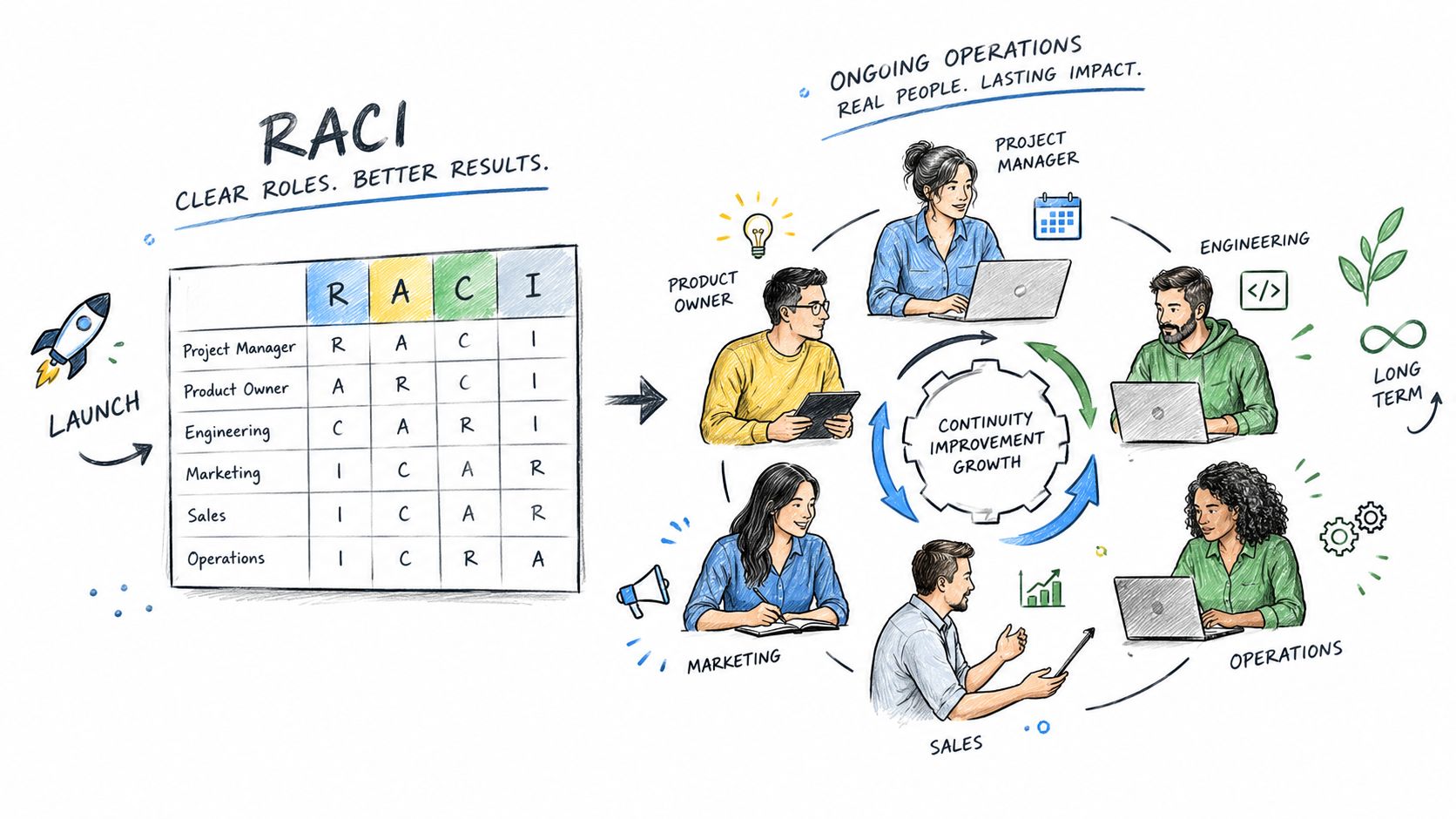
Create a RACI that survives hand-off. Assign ownership for editorial publishing, platform administration, integrations, analytics, security approval, incident response, vendor escalation, and pager duty. Each responsibility needs a named role, not a department name or shared mailbox.
Remove the single-person failure mode
Pair people on runbooks and architecture decisions. Record why important choices were made, which alternatives were rejected, and what evidence supports the current design. Any script capable of breaking production needs a second person who understands its purpose, inputs, output, and recovery path.
Maintain a register covering:
- Business rules: Pricing, promotions, permissions, publishing approvals, customer notifications, and exceptions.
- Automations: Scheduled jobs, webhooks, imports, exports, feeds, and alerts.
- Access controls: Least-privilege permissions, production access approval, credential ownership, and audit logs.
- Recovery procedures: Backup restoration, rollback, incident communication, and vendor escalation.
- Change governance: Release windows, approval paths, testing environments, and emergency-change rules.
AI-assisted development and content workflows require the same discipline. A 2025 survey of more than 275 US security and technology leaders found that 70% of organizations lacked optimized AI governance, while 49% anticipated shadow-AI incidents and 38% identified runtime as the most vulnerable phase, according to Proofpoint's State of AI Security 2025 report.
For any managed or custom stack, a managed AI agent with scoped permissions and audit logs needs review gates and reversible changes before it can alter templates, content, integrations, or production settings.
Fund hypercare as delivery work
Put 90 days of hypercare in the statement of work, with named engineers and business owners. Define release cadence, support severity levels, vendor escalation, reporting rhythm, and the first-year steady-state budget before go-live.
WebinOne supports managed operations and paid partner support. Licensed deployments for qualifying SIs can be discussed for customer-owned AWS environments and government projects. Use the website governance template to document decision rights, ownership, escalation paths, and controls that keep the new platform understandable after launch.
Post-Launch Monitoring, Cost, and the Next Step
A 30/60/90 cadence proves the replatform worked beyond deployment. Compare each signal with the pre-migration baseline, assign an owner, and turn deterioration into a written remediation plan.
At day 30, review crawl errors, Core Web Vitals, conversion drop-off, support tickets, accessibility defects, incident volume, and analytics parity. Any metric worse than 2% against the approved baseline triggers documented remediation. Investigate the cause before accepting a cosmetic fix or adding another unstructured backlog item.
At day 60, compare actual run-rate cost with the projected platform total cost of ownership. Flag any line item more than 10% from forecast, including hosting, support, development, integrations, licensing, and operational staff time. The purpose is to test whether the chosen operating model produces its expected economics, then correct the assumptions or the model.
At day 90, retire the war room, freeze the migration backlog, and move to quarterly optimization only when stability, ownership, and recovery evidence support that decision. Keep hypercare active if operational gaps remain.
| Milestone | Metrics to Review | Owner | Red Flag Trigger | Action If Triggered |
|---|---|---|---|---|
| Day 30 | Crawl errors, Core Web Vitals, conversions, tickets, accessibility, analytics | Product and delivery owners | Any metric worse than 2% from baseline | Write remediation plan and assign owner |
| Day 60 | Run-rate cost versus projected TCO, support volume, incident trends | Platform and finance owners | Any cost line more than 10% from forecast | Reconcile assumptions and approve correction |
| Day 90 | Stability, recovery readiness, editorial throughput, open defects, optimization backlog | Executive sponsor and platform owner | Unresolved operational or ownership gaps | Extend hypercare and keep governance active |
Availability is an engineering target, not a marketing label. AWS defines a 99.99% monthly availability target for Amazon EC2 when instances run concurrently across at least two Availability Zones in a region, or across at least two regions where a region has only one Availability Zone. Its reliability guidance translates that target into approximately 52 to 53 minutes of allowable downtime per year, as described in the Amazon EC2 Service Level Agreement.
That target covers availability, not every disaster-recovery requirement. Availability and continuity of operations require separate measures. A zero-downtime cutover does not prove that restoration from a larger incident will work. The runbook must define backup validation, recovery ownership, restoration steps, and the conditions for rollback or failover.
Use the closing review to confirm that the operating model can preserve accessibility, analytics, editorial throughput, and service continuity without the migration team. WebinOne reports 99.99% uptime over the last 12 months, a 99.95% availability commitment in its published SLA, dedicated server options, selectable data residency, and AWS-backed delivery for agencies, enterprises, and qualifying systems integrators. Agencies can use pricing from $10 per month per site and zero transaction fees on ecommerce as commercial inputs, while custom ecommerce work remains scoped as a TeamOne project.
WebinOne helps agencies, systems integrators, AWS partners, and enterprise teams plan, migrate, govern, and operate multi-site digital platforms with staged delivery and managed support. Start with a replatform readiness conversation through WebinOne, bringing the current architecture, URL inventory, integration map, accessibility baseline, and rollback assumptions for review.