Headless CMS for Enterprise Architecture
The popular advice says enterprise buyers should start with front-end freedom, choose the preferred framework, and let the CMS follow. That reverses the risk. Headless CMS for enterprise succeeds or fails on API governance, security ownership, editorial accountability, and total operating cost. A flexible front end doesn't help when no team owns schema changes, cache invalidation, incident response, or the integrations that connect every channel.
The category has moved beyond early adopters. A 2024 survey summary reported that 73% of organizations used headless architecture in some form, up from approximately 34% in 2019 and 59% in 2021 according to the survey analysis. That adoption makes the procurement question more demanding, not simpler. Enterprise teams need a platform and operating model that can support multiple brands, regions, applications, and release cycles without turning every content change into a platform engineering project.
Table of Contents
- The Operational Reality of Headless Architecture
- Designing Distributed API Platforms
- Mapping AWS Security and Shared Responsibility
- Enforcing Governance Across Global Brands
- Evaluating Managed DXP Economics
- Executing a Phased Migration Strategy
The Operational Reality of Headless Architecture
WebinOne treats headless delivery as an operating-model decision, not a badge of technical modernity. A decoupled architecture can improve reuse and channel flexibility, but it doesn't automatically reduce cost or complexity.
The hidden bill begins after the initial build. A fragmented stack may separate the content service, front ends, search, commerce, media, personalization, analytics, identity, and deployment pipelines. Each component can be sensible in isolation. The enterprise still needs people to define integration ownership, test compatibility, monitor dependencies, document failure modes, and coordinate vendors when a release crosses system boundaries.
A recent composable-technology survey identified budget as the leading adoption barrier at 32.6%, followed by concern about wasting existing investments at 28.5% and complicated implementation at 29% in the published survey summary%20(1).pdf). Those figures don't prove that every headless program costs more. They do show why a buyer should model operational labor before approving a platform made from disconnected services.
The work buyers often omit
Migration is more than exporting pages. Teams must map legacy fields to governed content types, preserve redirects and metadata, validate media references, rebuild previews, and confirm that regional exceptions still work. They also need a rollback plan for content and code, not only a cutover date.
Integration ownership creates another recurring cost. Someone must approve API contracts, manage credentials, rotate secrets, review rate limits, and decide when a breaking change is acceptable. Someone else must own observability across the request path, because a slow external dependency can appear to users as a CMS failure.
Schema governance becomes especially important as more teams reuse content. A seemingly minor field change can affect websites, applications, commerce displays, search indexes, and automated content operations. The platform needs version history, validation, testing environments, and accountable approval, or the enterprise replaces a coupled CMS with undocumented integration coupling.
Practical rule: Price the people and controls required to operate the architecture, not just the software licenses required to assemble it.
WebinOne's managed DXP model is relevant when an agency, systems integrator, or enterprise team wants headless APIs alongside centralized CMS, ecommerce, CRM, and multi-site operations. The decision should still follow the workload. If a single property needs a highly specialized front end but has limited channel reuse, a fully distributed stack may add more operational surface than business value.
Designing Distributed API Platforms
WebinOne provides headless CMS delivery through APIs, but enterprise teams should design the implementation as a distributed API platform. Independent scaling is useful only when contracts, caching, observability, and ownership are explicit.
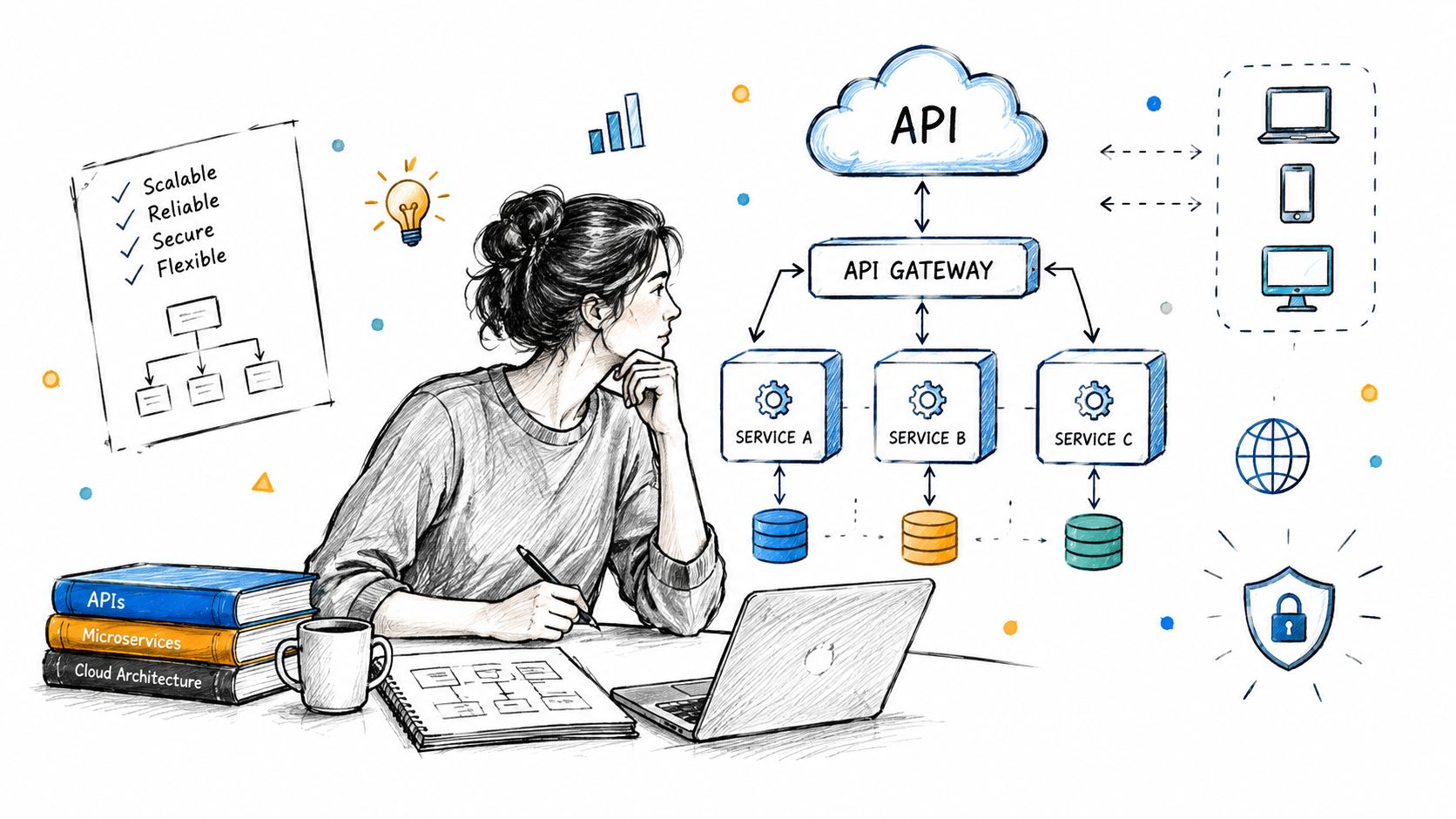
A monolithic renderer ties content retrieval and presentation deployment together. A headless design lets the content service expose structured data through REST or GraphQL while separate web, mobile, commerce, or application layers consume it. The content APIs can be cached and replicated independently, and a front-end release doesn't need to redeploy the editorial system. That reduces the blast radius of presentation changes and makes capacity planning more granular.
A 2025 academic review describes headless architectures as exposing structured content through REST or GraphQL APIs and connects independently scaled delivery layers with improved scalability and responsiveness. The same review cites survey evidence that approximately 83% of adopting organizations reported faster iteration cycles and improved KPIs in the academic review. The useful conclusion isn't that every API program produces the same outcome. It's that the architectural benefit depends on disciplined delivery boundaries.
The contract matters more than the framework
An enterprise implementation should require an API contract before multiple consumers begin development. That contract can use OpenAPI or a GraphQL schema and should define:
- Versioning: State how old consumers remain supported and when deprecated fields will disappear.
- Schema evolution: Make additive changes safe, test breaking changes, and assign an owner to every model.
- Caching: Document cache-control behavior, invalidation triggers, stale-content tolerance, and origin protection.
- Reliability: Set latency and error SLOs for critical content paths, then measure them at the gateway and consumer.
- Consumption controls: Apply quotas, timeouts, retries, and circuit breakers so one dependency can't exhaust shared resources.
- Observability: Correlate content mutations, API calls, cache events, deployment changes, and downstream failures.
Teams should also isolate untrusted execution. Where custom code, automations, or customer-supplied logic can run, sandboxes for untrusted code provide useful background on containing execution risk in this serverless platform guide.
A practical API review should include a representative content request from authoring through delivery. It should test draft and published states, localization, invalidation, a failed dependency, a rate-limit response, and a rollback. WebinOne's guidance on REST API endpoints can support that review, but the enterprise still needs to document its own consumer responsibilities.
The wrong implementation creates a new bottleneck around one central API. The right one makes each service boundary visible, measurable, and reversible.
Mapping AWS Security and Shared Responsibility
Running a headless CMS on AWS does not transfer operational risk to AWS. It clarifies the boundary. WebinOne runs as a managed platform on AWS, and qualifying systems integrators can also use a licensed deployment in their own AWS account or a customer's account by agreement, including AWS GovCloud. In both models, region selection and AWS hosting are infrastructure choices, not proof of compliance.
AWS defines its role as security of the cloud: the infrastructure, hardware, networking, software, and facilities behind AWS services. The customer remains responsible for security in the cloud, and the exact split changes with the service model and workload in AWS's shared-responsibility guidance.
That distinction matters more in headless architecture than many buying teams expect. A self-managed deployment can leave the customer responsible for guest operating systems, patching, installed software, utilities, network controls, and firewall configuration. A managed platform can narrow that scope, but only where the contract names the operated controls, the response duties, and the evidence the provider will supply.
Build the responsibility matrix first
Start with a matrix before discussing feature depth. WebinOne's guidance on running headless CMS on AWS is useful here because it maps platform boundaries to a managed deployment model, which is usually where hidden ownership gaps appear.
A practical matrix assigns an owner to each CMS layer and records the control evidence you expect to see:
| Component | Ownership questions | Evidence to require |
|---|---|---|
| Authoring | Who manages privileged access, roles, and administrative patches? | IAM policy, access reviews, audit records |
| API delivery | Who controls authentication, validation, quotas, and deprecation? | Gateway policy, API inventory, runtime metrics |
| Search and integrations | Who patches connectors and handles dependency failure? | Dependency register, timeout rules, incident procedure |
| Media and content data | Who protects storage, backups, retention, and recovery? | Data-control policy, restore test, retention record |
| Front-end applications | Who owns application code, dependencies, and deployment rollback? | Release process, vulnerability management, rollback evidence |
NIST's API security guidance points to the controls that usually decide whether a distributed stack stays governable in production: zero-trust handling of requests, encryption in transit, user and service authentication, request and response validation, rate limits, timeouts, circuit breakers, and an API inventory with owners, security requirements, and runtime metrics in its API protection guidance. Those controls apply to internal service calls too, not just public endpoints.
AWS also places several areas firmly on the customer side, including IAM policy design, security groups, CloudTrail configuration, data-loss prevention, and detection related to compromised credentials or misuse in its customer security guidance. During migration review, ask direct questions. Who enables audit logging. Who rotates secrets. Who reviews privileged roles. Who responds when an administrative credential is abused.
A concise data security checklist to safeguard your organization in 2025 can help structure that review. It does not replace workload-specific controls, restore testing, or incident ownership.
WebinOne has passed the AWS Foundational Technical Review, holds the AWS Qualified Software designation, participates in AWS software and services programs, and is available on AWS Marketplace. Those facts are useful procurement signals. They are not a substitute for a contract that maps authoring, API delivery, search, media, identity, logging, recovery, and incident response to named parties, especially for regulated or government work delivered through SI partners and licensed deployments.
Enforcing Governance Across Global Brands
WebinOne supports centralized multi-site management, but centralization alone isn't governance. Global teams need boundaries that preserve local accountability while allowing approved content and models to be reused.
A shared repository can distribute a correction efficiently. It can also distribute an incorrect translation, an unapproved brand treatment, or a schema change that breaks several channels. Governance must therefore distinguish global standards from regional authority and make every consequential change traceable.
Define ownership before reuse
A workable governance model assigns four types of ownership:
- Model ownership: A named team approves content types, relationships, required fields, and schema changes.
- Brand ownership: Brand leads define tone, visual rules, approved components, and exceptions.
- Regional ownership: Local teams control market-specific content within documented boundaries.
- Platform ownership: Technical operators manage APIs, environments, permissions, monitoring, and rollback.
Permissions should be scoped by brand, locale, environment, content type, and action. Publishing rights shouldn't automatically imply schema rights. A translator may edit localized fields without changing the global content model, while a regional editor may publish a market update without publishing across every connected channel.
Make mistakes reversible
Every content mutation needs an immutable audit trail showing who changed what, when, through which interface or automation, and under which approval. Preview environments should render affected channels before publication. Reversible deployments should cover both code and content, because a front-end rollback won't repair a bad data mutation.
AI-assisted updates need the same controls. AgentOne, WebinOne's Managed Vibe Coding capability, operates inside the managed platform with scoped permissions, audit logs, reviewable changes, and reversibility before production. The important governance principle is broader than any one feature: automated actions must remain attributable, reviewable, and limited to approved scopes.
A multi-level approach to governance across enterprise content operations helps teams separate central policy from delegated execution. That separation matters when one platform serves many brands and regions.
Centralized content should make accountability clearer, not make responsibility impossible to locate.
The operating model should include emergency publishing and emergency rollback. A regional team needs a fast path for urgent corrections, but that path should still create an audit event and preserve the previous version. Global teams also need scheduled reviews of inactive users, inherited permissions, deprecated schemas, API consumers, and automation scopes.
The result is not maximum central control. It is controlled autonomy, where local teams can move quickly without turning a shared content foundation into a single point of failure.
Evaluating Managed DXP Economics
A three-brand estate can carry a surprising amount of hidden cost before anyone touches a license line. Separate content, commerce, and CRM services often look reasonable in procurement, then absorb budget in integration fixes, release coordination, duplicated monitoring, and the senior staff needed to keep cross-system behavior predictable. That is where the economic comparison should start.
The useful question is operational: which model leaves less work for the buyer to fund, staff, secure, and govern over time? Front-end flexibility matters, but enterprise economics usually turn on API ownership, change control, support boundaries, and how many teams must coordinate to ship a routine update without creating regressions.
A fragmented headless stack still fits some cases. If a business has a mature platform team, stable interfaces, and a clear reason to own each layer separately, that extra control can be worth the overhead. The economics shift when agencies or enterprise departments spend more time coordinating vendors and maintaining glue code than improving customer journeys.
Use a break-even model
Build the comparison around recurring cost, transition cost, and retained risk:
- Platform engineering: API gateways, deployment pipelines, environments, monitoring, caching, backups, and recovery.
- Integration ownership: Connector maintenance, authentication changes, vendor coordination, and contract testing.
- Editorial operations: Preview, workflow, localization, permissions, reusable components, and training.
- Security and compliance: Patching, access reviews, audit retention, incident response, and evidence collection.
- Migration and QA: Data transformation, redirects, content validation, accessibility checks, performance testing, and cutover rehearsal.
- Commercial exposure: Licenses, implementation work, support tiers, usage charges, and the cost of forced re-platforming.
| Cost Category | Fragmented Headless Stack | Unified Managed DXP |
|---|---|---|
| Platform operations | Multiple services, deployment paths, dashboards, and recovery procedures | A consolidated managed operating boundary |
| API governance | Contracts and policies coordinated across consumers and providers | Central API capability with documented consumer ownership |
| Security ownership | Each service and integration requires a responsibility decision | The service boundary can absorb defined platform duties |
| Editorial workflows | Often assembled across tools and custom interfaces | Managed CMS and multi-site operations in one environment |
| Commerce and CRM | Separate integration and data coordination | CMS, ecommerce, CRM, email, and APIs in one platform |
| Scaling | Each layer scales independently, with coordination overhead | Managed capacity with dedicated options where required |
| Migration risk | Repeated migration between components can compound | A phased migration can preserve existing estates while operations consolidate |
This is also where AWS responsibility boundaries matter. Even on well-managed infrastructure, the buyer still needs clarity on what remains their obligation at the application, identity, content, and integration layers. A lower platform operations burden does not remove the need to fund access governance, schema discipline, consumer management, and incident handling for business logic.
WebinOne publishes pricing from $10 per month per site, zero transaction fees on ecommerce, 99.99% uptime over the last 12 months, and a 99.95% availability commitment in its published SLA. Those figures are useful only if they are tested against the buyer's workload, support model, recovery requirements, and the enterprise engagement model.
The economic case usually improves when an agency runs many client sites through one operating model, when a systems integrator standardizes delivery patterns, or when an enterprise needs one governed foundation across brands and regions. It weakens when the organization depends on narrowly specialized services that still require substantial custom work and separate support paths.
A managed platform is cheaper only when it removes work the buyer would otherwise perform. The contract must state which work has moved, which work remains, and how exceptions are priced.
Custom ecommerce work with no transaction fees still depends on scope as a TeamOne project. That belongs in the business case with migration, support, security ownership, and the steady-state cost of operating the estate after launch.
Executing a Phased Migration Strategy
WebinOne recommends a phased migration because enterprise estates contain valuable content, active integrations, and operational knowledge that shouldn't be discarded in a single cutover. A staged program reduces blast radius, exposes hidden dependencies early, and preserves existing investments while the target model proves itself.
The first phase is an inventory, not a rebuild. Teams should record sites, brands, locales, content types, integrations, ownership, redirects, media, traffic patterns, security obligations, and recovery requirements. They should also identify undocumented behavior that currently lives with a small number of specialists.
Move a representative slice
The pilot should be operationally meaningful, not merely easy. Choose a property or business area that contains real localization, approval, search, commerce, or integration requirements. Define acceptance criteria for content parity, SEO metadata, permissions, accessibility, API behavior, observability, rollback, and editorial publishing.
Next, establish the target foundations:
- Model the content: Separate reusable structured content from presentation-specific markup and document ownership.
- Build the delivery contract: Define API versions, caching, authentication, error behavior, SLOs, and consumer responsibilities.
- Set governance: Create roles for global, regional, brand, editorial, and technical teams, then test approval and audit paths.
- Run parallel validation: Compare representative pages, content records, media, redirects, forms, commerce behavior, and API responses.
- Rehearse cutover: Test rollback, dependency failure, access recovery, cache behavior, and incident escalation before production.
- Expand by wave: Apply lessons to the next site or brand, keeping the migration factory documented and repeatable.
TeamOne supports staged, tested, zero-downtime migration and operates the platform after delivery. WebinOne reports thousands of sites migrated, including complex live-site programs and estates built with open-source, legacy, and custom systems. Those claims describe platform experience, not a guarantee that every migration has identical scope, so the statement of work should define the data, integrations, testing, and support obligations for the specific estate.
For agencies, the phased model creates a repeatable service rather than a one-off rebuild. For systems integrators, it creates a controlled path from maintenance-heavy platforms to a managed deployment, including licensed operation in a customer's AWS account where the engagement qualifies. For enterprise teams, it provides evidence before portfolio-wide commitment.
The strongest migration plan preserves the business's ability to publish at every stage. It doesn't make the organization wait for a perfect replacement.
WebinOne combines headless APIs, centralized multi-site management, managed hosting on AWS across six AWS regions, and migration support through TeamOne. Enterprise teams and systems integrators can speak with WebinOne about a partnership or migration, bring an inventory of sites and integrations, and leave with a scoped operating model rather than a generic platform pitch.