White Label SaaS Platform: An Agency Operator's Guide
Most advice about a white label SaaS platform starts with the wrong question. Buyers compare logos, custom domains, reseller markup and branded login screens, then discover after launch that the agency still owns support, security remediation, uptime communication, migrations and client offboarding.
That model can improve revenue, but it can also turn a low license fee into an expensive service obligation. WebinOne operates white-label arrangements for agencies, systems integrators and AWS partners, and the practical lesson is direct: the platform determines how many hours each client site costs after launch. The right evaluation covers five decisions, the operating model, three-year economics, legal boundaries, integration and migration mechanics, and evidence that the vendor can support the promises made under your brand.
Table of Contents
- Why White Labeling Is an Operating Model, Not a Branding Feature
- What a White Label SaaS Platform Actually Gives You
- The Real Economics of Reselling a Platform
- Legal and Branding Considerations Before You Sign
- Integration Points and Migration Mechanics
- An Evaluation Checklist for Choosing Your Platform
- Your Next Step With WebinOne
Why White Labeling Is an Operating Model, Not a Branding Feature
WebinOne treats white labeling as an operating model, not a visual customization layer. A branded domain and login screen do not define the arrangement. The question is who owns support, security remediation, migrations, SLA exposure and client offboarding after launch.
The commercial risk appears when an agency sells a managed experience but receives only a branded interface. Its team may still answer technical questions, coordinate incidents, apply patches, preserve backups, explain availability and manage data-location concerns. That workload can erase the margin created by the license markup.
A white-label agreement should be judged across the full client lifecycle, not at the point of sale.
The five decisions that determine viability
First, define support ownership. State which questions the agency handles, which issues the platform provider accepts, how escalation works and what response boundaries apply. Support is part of the service being resold.
Second, document incident responsibility. The agreement should identify who detects failures, communicates with the client, preserves evidence, coordinates security remediation and manages SLA exposure. A status page helps with visibility, but it does not replace a named escalation path or a communication process.
Third, measure portfolio economics. The monthly site charge is only one line in the model. Include implementation, integrations, training, migration, account management, brand maintenance, support time and emergency work. Price the whole three-year run, including the hours required to keep each site profitable.
Fourth, test migration and offboarding before signing. Confirm how content, redirects, files, data and client ownership move out of the platform. Easy onboarding paired with difficult export creates dependency that can become a commercial liability when a client leaves.
Fifth, establish governance at scale. Multi-site teams need role boundaries, centralized administration, auditability and consistent release practices. The branded service should reduce variation between sites while keeping responsibility visible.
Operating rule: The reseller owns the client relationship, so the agreement must state exactly which operational responsibilities remain with the platform provider.
Cloud delivery makes this model practical across many markets, but adoption remains uneven. The OECD's analysis of cloud adoption reports cloud use by an average of 49% of firms with at least 10 employees across OECD economies, with national adoption ranging from 16% to 78%. That variation is why hosting, residency, security, support and exit terms should be evaluated together.
What a White Label SaaS Platform Actually Gives You
WebinOne gives a partner more than a logo layer. The practical offer combines the platform stack, the partner administration surface and the operational services that keep client sites running after delivery.
A useful way to understand a white label SaaS platform is as wholesale capacity. The provider operates the underlying software, hosting and maintenance. The agency packages that capacity into a client service with its own positioning, implementation process, pricing and relationship model.
The three layers behind the offer
The first layer is the platform stack. Depending on the provider, that may include content management, ecommerce, CRM, email marketing, forms, search, member areas, APIs and multi-site management. The important question isn't whether a platform has a long feature list. It's whether those capabilities share administration, data and release responsibility.
The second layer is the partner portal. Agencies need to manage templates, sites, staff access, billing, support tickets and client workspaces without exposing unrelated accounts. WebinOne's agency portal supports white-label login and admin branding, with templates, sites, staff, billing and support tickets operated under the partner's brand.
The third layer is invisible to the client, but it carries most of the operational value. It includes hosting, backups, security headers, SSL, platform updates, infrastructure monitoring, incident response and the maintenance of native extensions. If the provider leaves the agency to assemble and patch these components, the white label arrangement is mostly cosmetic.
Branding should support the relationship, not obscure accountability
A branded login, admin interface, support surface and invoice help the agency present a consistent client experience. They don't eliminate the need to explain who owns data, who approves production changes or who handles a service incident.
That distinction is central to the difference between white label vs building in-house. Building internally can provide control, but it also creates responsibility for security, upgrades, infrastructure and product maintenance. Buying a managed platform can remove much of that work, provided the contract and support model are explicit.
The value isn't in pretending the vendor doesn't exist. The value is in having a capable vendor carry the platform maintenance while the agency carries the client strategy, delivery and commercial relationship. That is what lets an agency sell a managed digital experience rather than resell access to another dashboard.
The Real Economics of Reselling a Platform
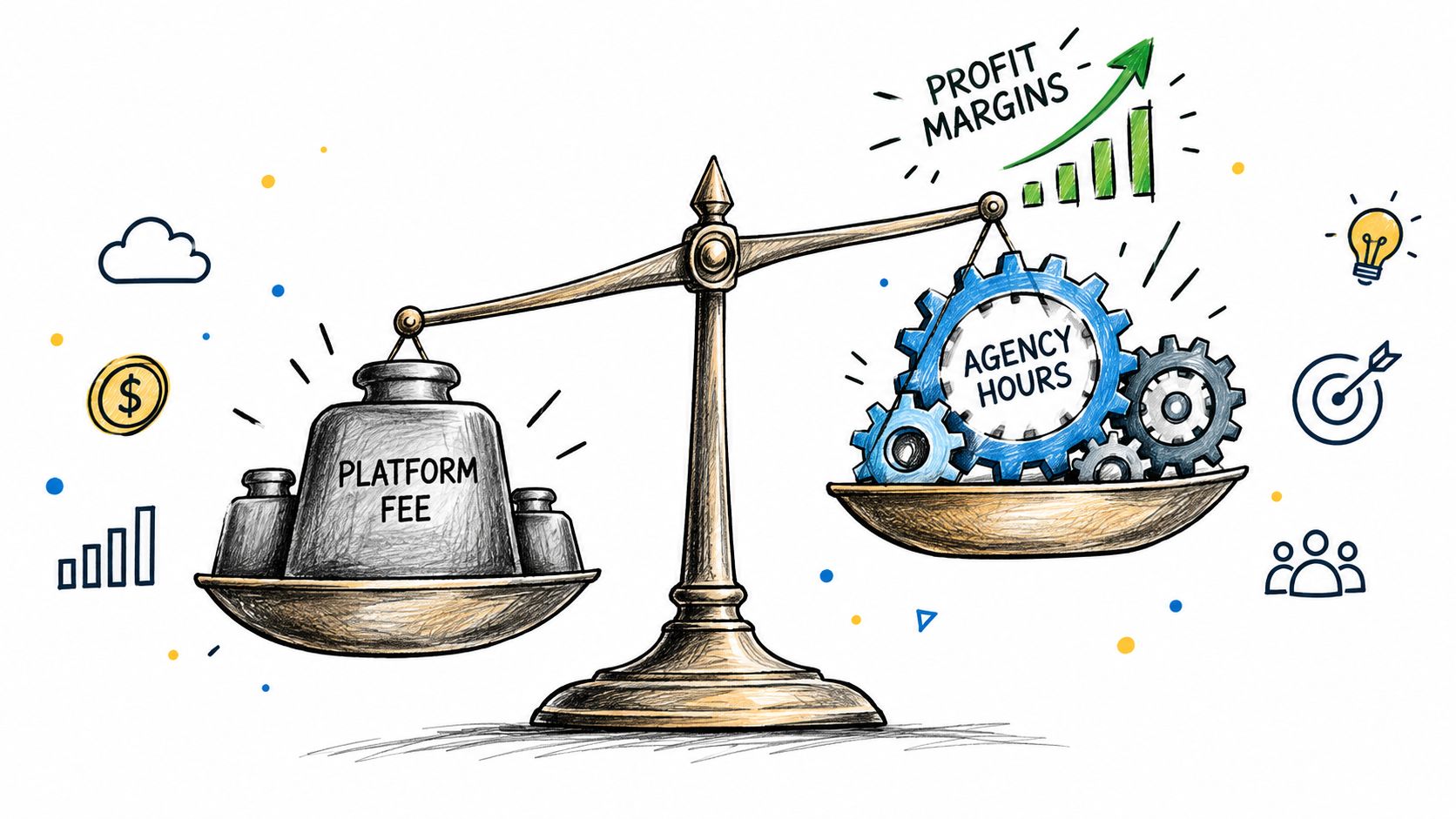
WebinOne's pricing model starts from $10 per month per site, but the license is only the first cost. A viable reseller model compares platform fees with agency labor, failure exposure, migration effort and the time required to support the portfolio over three years.
The basic calculation has two parts:
- Platform cost, including site licenses, partner services, transaction charges and any implementation fees.
- Agency operating cost, including discovery, configuration, content migration, integrations, training, support, account management and incident handling.
The second category is where many reseller arrangements lose margin. If the provider makes the agency responsible for plugin conflicts, patching, uptime updates, backups and emergency remediation, the cheapest license can create the highest total cost.
Calculate the cost after launch
Implementation and integrations create the first labor bill. Brand maintenance continues throughout the relationship. Independent marketplace analysis places ongoing brand maintenance at roughly 10% to 20% of annual licensing, while implementation, integrations, training and domain work can add thousands of dollars before launch, as described in this white-label platform cost analysis.
A three-year model should include:
- Launch work: discovery, migration, templates, forms, integrations and training.
- Recurring service: support triage, content operations, reporting and client administration.
- Failure exposure: incident communication, emergency fixes, restoration and credits.
- Commercial leakage: transaction charges, unplanned custom work and client-specific exceptions.
- Exit work: data export, redirect preservation, access transfer and documentation.
WebinOne provides zero transaction fees on ecommerce, while custom ecommerce work is scoped as a TeamOne project. The distinction matters. A platform can keep recurring transaction costs out of the standard margin calculation, but bespoke requirements still need a written scope and delivery budget.
A simple reseller test
Suppose an agency prices a managed site service around a standard implementation package. The agency should calculate the hours saved when the provider owns platform patching, infrastructure operations and native extension maintenance. Then it should subtract the hours still required for strategy, content, design, approvals and client communication.
A reseller tier pays for itself when the recurring gross margin from the portfolio exceeds the partner administration and support cost, not merely when the license is cheaper than a client-facing subscription. The agency should run the calculation per site, then again across the full portfolio, because shared templates and centralized governance change the economics.
WebinOne's reseller margin guidance addresses the commercial side of this calculation. The useful question is not “What can the agency mark up?” It is “How much operational labor remains attached to every site after the markup?”
Paid partner support is part of that answer. If the agency can escalate platform issues through a defined support relationship, it can protect specialist staff from becoming a permanent first line for infrastructure problems. That doesn't remove accountability, but it makes the accountability manageable.
Legal and Branding Considerations Before You Sign
WebinOne's published SLA and operational disclosures give agencies a baseline for defining responsibility, but the reseller agreement still needs precise boundaries. Clients see the agency's brand first, so a platform failure can become an agency reputation problem even when the technical cause sits elsewhere. White-labeling therefore requires an operating model for support, security remediation, incident handling and client continuity.
The contract should identify who owns hosting, security controls, backups, supplier risk, data portability and incident communication. It should also define the offboarding process when a client leaves, including export formats, access transfer, retention, deletion and any migration assistance. Those terms affect the agency's delivery workload and its exposure throughout the client relationship.
Put exposure into writing
A vague support promise creates risk in both directions. The agency might promise a response time it cannot deliver, while the platform provider might handle a production incident as an ordinary ticket without partner escalation. The agreement should set severity levels, notification paths, response expectations and the evidence supplied after an incident.
The financial stakes support that discipline. Industry breach-cost research analyzing 600 organizations affected by breaches between March 2024 and February 2025 reported a global average breach cost of $4.44 million, with the U.S. average at $10.22 million. The same breach-cost research reported an average cost of $4.91 million for third-party vendor and supply-chain compromises. These figures do not predict the cost of a particular agency incident, but they show why supplier responsibility belongs in procurement documents rather than informal assumptions.
WebinOne publishes a 99.95% availability commitment in its SLA and reports 99.99% uptime over the last 12 months. It also provides a public status page, security overview and roadmap backlog. These materials help partners assess operational maturity, while the agreement must still cover client-specific obligations, escalation rights and the agency's responsibilities to customers.
Treat data residency and offboarding as commercial terms
Data location can affect procurement for public-sector, regulated and multinational clients. Ask where production data is hosted, whether residency choices are available, who can access the environment and what audit evidence the provider can supply. The data residency requirements guide offers a practical starting point for that review.
Offboarding deserves the same attention. A departing client may require content, media, customer records, ecommerce data, redirects and documentation in another operating environment. The agreement should state what the agency can export, what the provider will assist with and how long access remains available.
Branding principle: Brand the client experience, but put responsibility boundaries in writing.
A workable arrangement protects the agency's commercial relationship without requiring unsupported promises about infrastructure. It also gives the client a clear path to ownership, access and continuity if the relationship changes. Review these obligations against the full run of each account, including support, remediation and offboarding work, rather than judging the arrangement by the monthly license alone.
Integration Points and Migration Mechanics
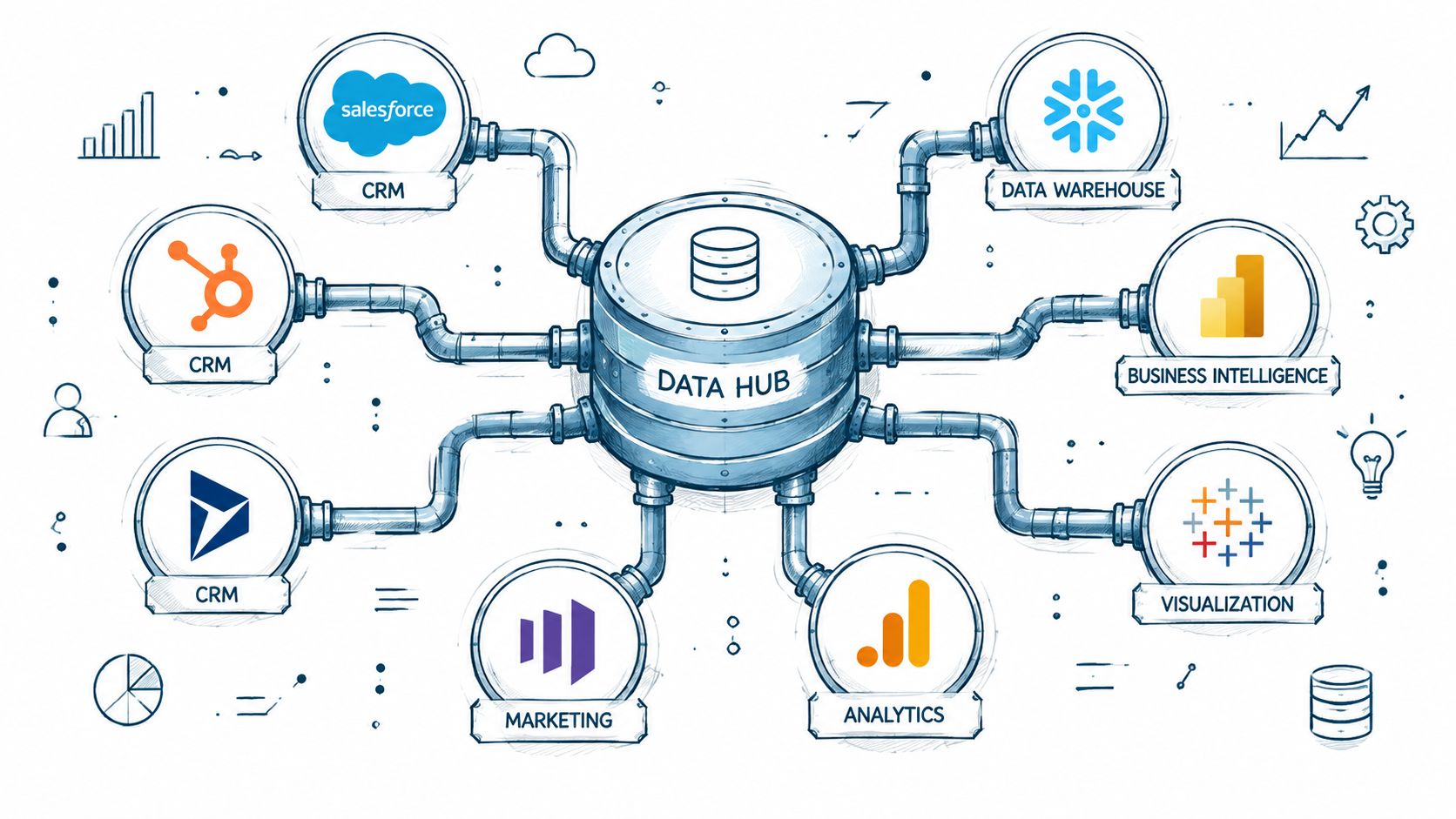
WebinOne connects through APIs, webhooks, headless delivery and native extensions, while migration is handled as staged delivery work. The technical question is whether the platform reduces independent maintenance without blocking the systems an agency or integrator already operates. That answer depends on integration depth, extension ownership and the amount of custom code a partner must support.
A serious integration review should cover four surfaces:
- API breadth: The platform exposes 300+ APIs, allowing applications and services to work with content, commerce and operational data.
- Event delivery: Webhooks support event-driven workflows without forcing every integration into a scheduled polling process.
- Front-end flexibility: A headless CMS can deliver content and commerce to different front ends, applications and channels.
- Extension ownership: Native extensions maintained by the platform provider reduce dependence on a large collection of independently patched add-ons.
The REST API endpoints documentation gives technical teams a concrete basis for reviewing available endpoints, authentication, workflows and data exchange before committing to a migration.
Migration is a portfolio exercise
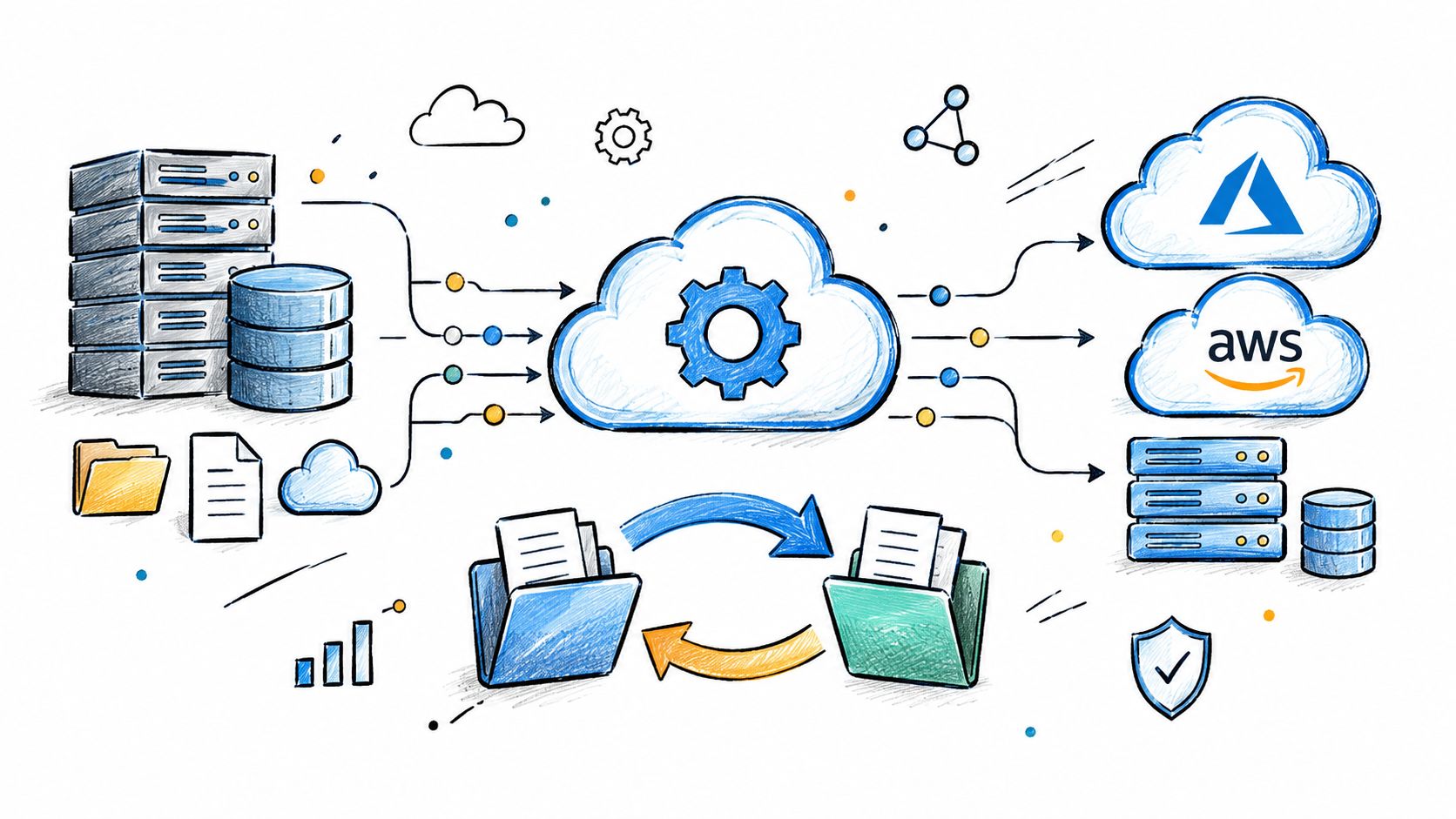
A one-site rebuild can conceal the difficult work. A portfolio migration starts with discovery:
- Inventory templates, plugins, modules, custom code and integrations.
- Map URLs, redirects, metadata, forms and search behavior.
- Classify components into reusable, replaceable and bespoke work.
- Test commerce, authentication, lead capture and data synchronization.
- Run staged cutovers with validation, monitoring and rollback planning.
Security maintenance makes this process a commercial concern. Recent breach research found that vulnerability exploitation represented 20% of breach initial-access vectors, while leaked secrets discovered in GitHub repositories had a median remediation time of 94 days. The Verizon 2025 DBIR executive summary supports a direct procurement question: who owns remediation when a client portfolio contains custom code and independently maintained components?
WebinOne has migrated thousands of sites, including complex live-site portfolios. That history does not make every migration automatic. Buyers should still expect discovery, test environments, cutover planning and post-launch validation, rather than treating migration as a content import.
For region-sensitive delivery, WebinOne runs as a managed platform in managed cloud infrastructure across six global regions. By agreement, qualifying systems integrators can use a licensed deployment in the integrator's or customer's own cloud account, including qualifying government cloud environments. Confirm the available deployment model, access responsibilities, support boundary and remediation process before assigning those obligations to the reseller. The migration plan should also price testing, rollback readiness and post-launch support as operating work, not as incidental setup.
An Evaluation Checklist for Choosing Your Platform
WebinOne should face the same operational review as any white-label SaaS platform. A strong demo does not answer who owns support, security work, client data, migrations, incidents or offboarding. Buyers need evidence that shows how the service will run across the full client relationship.
A TekRecruiter's vendor selection guide can structure the procurement process. Digital platform buyers also need questions tied to recurring site operations, reseller margin and SLA exposure.
| Criterion | What to Verify | Why It Matters |
|---|---|---|
| Vulnerability remediation | Who identifies issues, applies patches and validates fixes? | Undefined security work can become the reseller's queue and cost. |
| Operational evidence | Can partners access status information, incident records and audit evidence? | Client updates need documented facts rather than assumptions. |
| Support boundaries | Which issues are covered, at what tier, and through which escalation route? | Support labor affects margin, response commitments and SLA exposure. |
| Data residency | Where is data hosted, and what regional options or evidence are available? | Hosting arrangements can determine whether a regulated client can proceed. |
| Ecommerce economics | Are transaction fees included, and how is custom work scoped? | Recurring charges and bespoke work change the real service margin. |
| Multi-site governance | Can staff, brands, templates and permissions be managed centrally? | Central controls reduce the cost of operating each site separately. |
| Integration surface | Are APIs, webhooks, headless delivery and native extensions available? | Integrations need to remain maintainable as client requirements change. |
| Migration delivery | Does the provider support discovery, testing, staged cutover and rollback? | A defined delivery process protects content, workflows and continuity. |
Use published answers, then test them
WebinOne's published answers include a 99.95% availability commitment, 99.99% uptime over the last 12 months, AWS hosting across six regions, partners in 16 countries, US and Australian government clients, transparent pricing from $10 per month per site, and zero transaction fees on ecommerce. The WebinOne reseller program provides commercial context for agency delivery. Buyers should still request the evidence, exclusions and responsibility boundaries behind each statement.
The checklist should expose incomplete answers. “The partner handles support” needs escalation rules, response expectations and ownership of unresolved tickets. “The platform is secure” needs remediation ownership, notification procedures and audit evidence. “Migration is supported” needs a discovery method, test plan, acceptance criteria and rollback procedure.
A capable product can still produce an unprofitable service if the operating duties remain unclear. Price the three-year run, including support hours, incident handling, custom integrations, client onboarding and eventual offboarding. Then request the SLA, support process, data handling terms, export approach, migration scope and partner economics before committing a portfolio. Ensure the answers fit the agency's actual staffing model, because a low license cost does not compensate for unmanaged obligations.
Your Next Step With WebinOne
WebinOne works when it carries enough maintenance, security and scaling responsibility for the agency to focus on client value. Treat the arrangement as an operating model. Define support ownership, security remediation, migration duties, SLA exposure and client offboarding before signing. Then price labor, failure risk and the full three-year relationship, not only the monthly license.
Agencies should confirm that white-label login, admin branding, templates, billing and support tickets can support a repeatable managed service under the agency's brand. Each new site should add client value without creating an unmanaged maintenance obligation.
Systems integrators, cloud partners and enterprise teams should discuss partnership and migration requirements with the WebinOne team. The conversation can cover multi-site governance, migration delivery, hosted operations, data residency and GovCloud options for government projects. For qualifying SIs, it can also address licensed deployment in the SI's or customer's own cloud account.
Agencies should review the WebinOne reseller program. SIs, cloud partners and enterprise buyers should start a partnership or migration conversation through WebinOne Enterprise, bringing a current portfolio, support model and three-year cost calculation.
WebinOne provides a branded, managed DXP for agencies and integrators that need to operate client sites without owning every platform maintenance task. Visit WebinOne to evaluate the available paths against support ownership, security, SLA and portfolio economics.