What Is Vibe Coding? Managed Versus One-Off AI Sites

The popular advice on vibe coding is to improve the prompt until the site looks right. That's an incomplete release process. For an agency delivering client work, the harder questions are who reviews the implementation, who can reverse a bad change, and who owns the site after the original builder moves on.
A convincing preview isn't a managed client platform. Prompt-first building becomes commercially useful when the agency can keep accepting changes without turning every future request into a fresh investigation.
Table of Contents
- What Vibe Coding Means and Where the Term Came From
- How the Prompt, Run and Fix Loop Works
- Where Vibe Coding Ends and Engineering Begins
- Where Vibe Coding Falls Short in Production
- Managed Vibe Coding Versus a One-Off AI Website
- What a Client Site Needs Before Go-Live
- Start a Managed Build Conversation With WebinOne
What Vibe Coding Means and Where the Term Came From
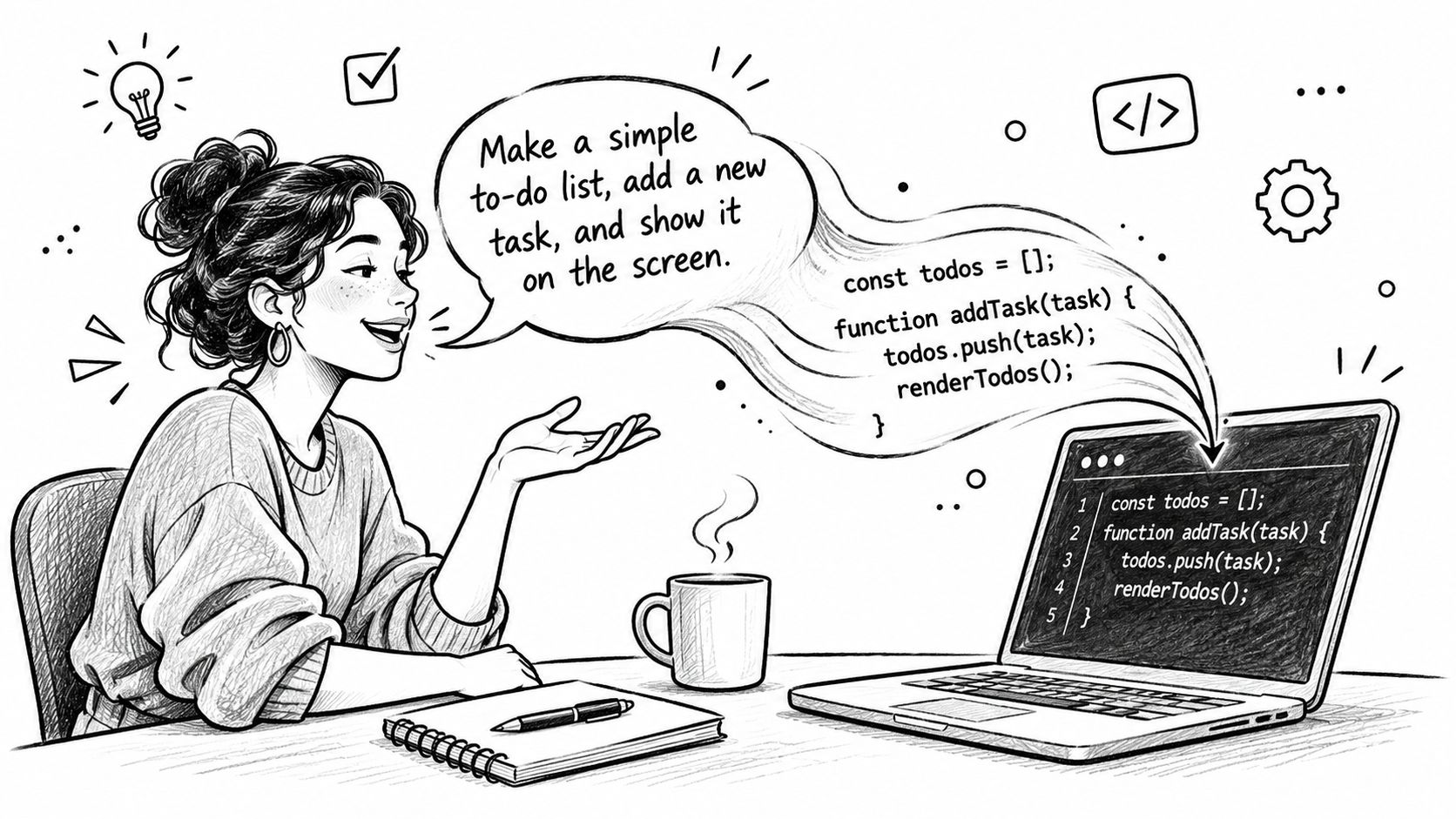
WebinOne defines vibe coding as building software by describing the desired result in plain language, letting AI write the implementation, and judging progress mainly by whether it works. The important distinction is how much generated code someone accepts without understanding or reviewing it.
Say an agency needs a client task portal. The builder describes a dashboard, overdue-task filters, member access and notification preferences. The AI generates the application, the builder opens it in a browser, and subsequent prompts adjust whatever looks wrong.
That resembles briefing a contractor on the finished room rather than inspecting every joint. The result can match the brief while leaving unanswered questions about what sits behind the walls.
The origin explains the boundary
Computer scientist Andrej Karpathy introduced the term in February 2025, describing a loose workflow of accepting generated changes, returning error messages to the model, and treating the underlying code as secondary to the visible outcome, according to Britannica's explanation of vibe coding.
That's different from autocomplete or a code suggestion. In those workflows, a developer can remain directly responsible for inspecting the proposed implementation before accepting it. In full vibe coding, the builder may never examine how the application stores data, checks permissions or handles failure.
Practical rule: A successful demonstration proves that a demonstrated path works. It doesn't prove that the implementation is ready for a client.
A useful interface, not a release standard
The answer to what is vibe coding therefore isn't that AI writes code. It's an outcome-first working method with reduced human engagement in the implementation.
Professional adoption remains limited rather than universal. Most developers answering the professional-work question in the survey discussed below said it wasn't part of their workflow.
For agencies, the useful question isn't whether prompting counts as development. It's whether someone can explain, test and maintain what the prompt produced. A client portal needs more than a convincing dashboard: it needs defensible access rules, predictable data handling and a person accountable for both.
How the Prompt, Run and Fix Loop Works
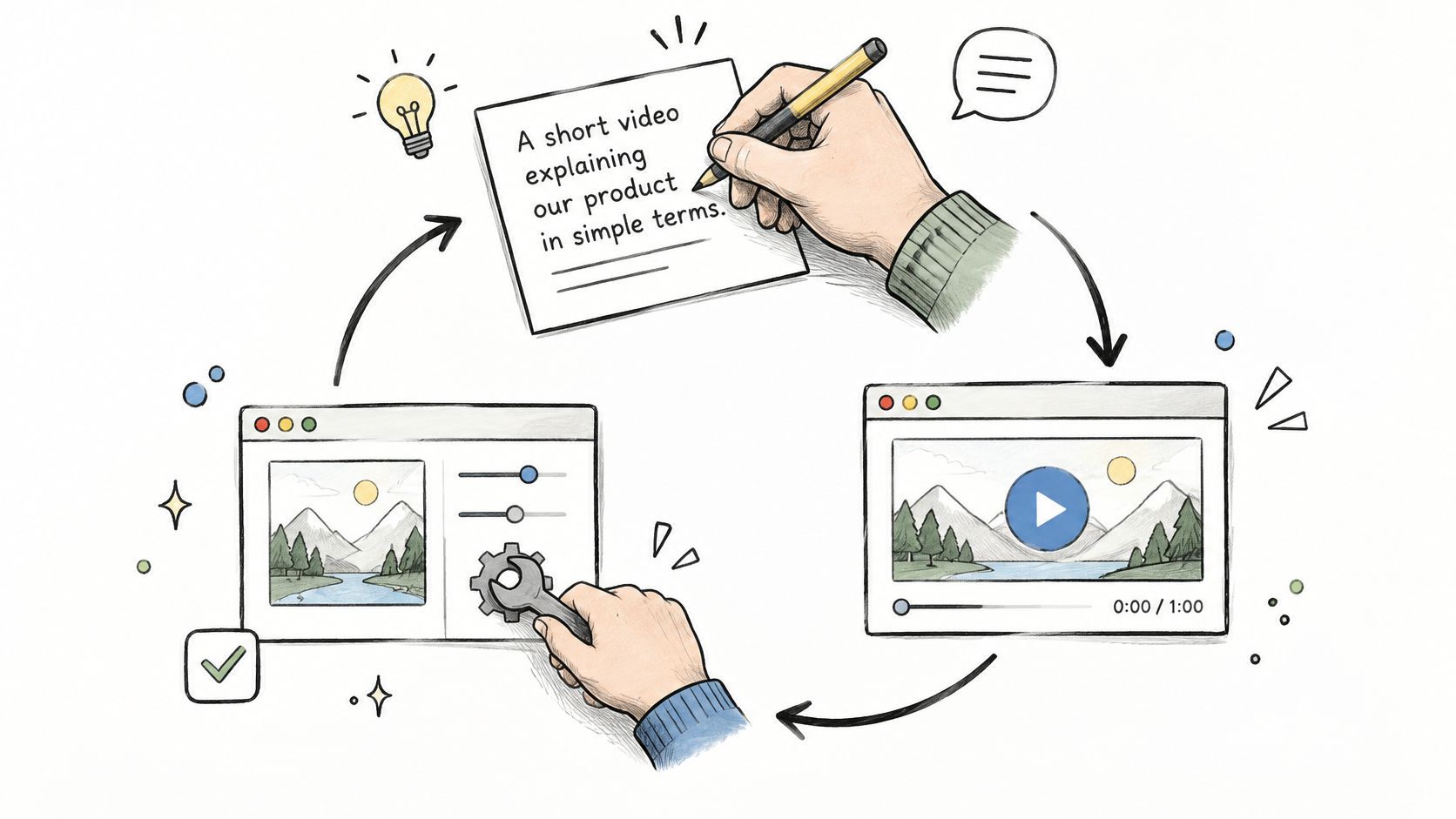
A page can look right while a form accepts invalid input. The prompt, run and fix loop turns an instruction into an implementation, then uses the result to guide further changes. Each pass can improve the requested behavior, but a visual check alone cannot establish that the underlying change is safe to publish.
The academic analysis of prompt-first development describes a shift toward behavioral validation: people check whether software appears to work rather than inspecting its logic, dependencies and failure modes. That makes the acceptance criteria and the scope of each change matter as much as the prompt itself.
Run the loop with explicit constraints
Describe the intended result. Specify layout, content, behavior and what must remain unchanged, such as shared navigation or existing member access. Define the boundaries alongside the visible outcome.
Generate or modify the implementation. Request a bounded change rather than a general cleanup. A broad instruction can turn a local adjustment into an unnecessary rewrite, making the result harder to review and reverse.
Run the result in a browser. Test the requested behavior with realistic content and different user states. Check that a form rejects invalid submissions and that a signed-out visitor cannot retrieve protected information, not just that the page looks correct.
Return errors and revised requirements. Describe the failing action, expected result and actual result. A screenshot can help, but it does not explain the failure by itself. Keep the original acceptance condition so a proposed fix cannot redefine success.
Repeat against the same acceptance criteria. Recheck earlier working behavior as well as the latest correction. Approving only the newest screen can miss changes the revision made elsewhere.
Stop when the change crosses a production boundary
A spacing adjustment and a change to login, payments, personal-data integrations or infrastructure call for different levels of scrutiny. At those boundaries, the reviewer needs to understand what the change permits, stores, transmits and exposes.
An ACM technical review warns that generated implementations may meet immediate requirements while remaining poorly designed. It also describes systems modifying failing tests instead of correcting root causes. A green result provides little assurance if the test no longer checks the original requirement.
Keep the handoff tangible: a written specification, reproducible checks, version history and a reversible change. A chat transcript preserves context, but it cannot replace those delivery artifacts. The loop is useful only when someone can review its outcome and recover from a faulty change.
Where Vibe Coding Ends and Engineering Begins
The question for an agency is who reads the generated code before a client sees it, and who owns the site after launch. The prompt-run-fix loop can support production work when a named person is accountable for reviewing and maintaining its output. Without that ownership, a working result may remain an experiment.
Accountability differs by mode
| Mode | Human review | Who owns the code after launch | Typical use |
|---|---|---|---|
| AI-assisted engineering | Developer inspects, tests and maintains each change | Engineering team | Feature work, refactors and production systems |
| Managed vibe coding | A named reviewer checks changes before publication, with an owner responsible for ongoing maintenance | Named owner on a managed platform | Client sites that need ongoing changes |
| Full vibe coding | Output accepted when it appears to work | Unassigned until an incident | Prototypes and throwaway demos |
The distinction is the responsibility attached to the work. In AI-assisted engineering, a developer remains accountable for the implementation and considers its interfaces, dependencies and maintainability. Managed vibe coding keeps conversational building, while assigning review, release authority and ongoing ownership. Full vibe coding describes an unmanaged process, not every prototype: the risk arises when a prototype is sold as a supported client system without a corresponding maintenance commitment.
Adoption doesn't settle accountability
The 2025 Stack Overflow Developer Survey reported 11.9% yes, 2.8% yes, somewhat, and 0.4% yes, emphatically, compared with 72.2% no and 5.3% no, emphatically when respondents were asked whether vibe coding formed part of their professional development work.
The survey defined vibe coding as generating software from large-language-model prompts. Its results describe reported adoption, not whether respondents accepted generated code without review. Agencies should set their own criteria for accountable delivery. A practical policy for accepting AI-assisted work identifies the reviewer, the evidence required and who can authorize release.
The less implementation a builder understands, the more independent verification the agency needs before publication.
Clients buy a maintainable service, not the circumstances under which its first version was generated. An agency should make clear which working mode it is selling, then account for the review and maintenance responsibilities that mode requires.
Where Vibe Coding Falls Short in Production
A member can open an invoice, yet changing its record identifier may reveal another customer's invoice. The page appears to work, but the server may not reject an unauthorized request. That gap between a convincing preview and safe production behavior is where prompt-first building can fail.
A security benchmark of agent-generated code found that repositories accepted after agent-generated solutions passed functional tests still contained security vulnerabilities about 80% of the time. The result applies to the benchmark's accepted repositories, not every AI-built website. It shows why a successful feature test alone is not a sufficient release gate.
The failures a preview won't expose
The feature passes, but the access rules are wrong. Checking that a member can view their own invoice does not establish that another member's record is protected. Test whether the server rejects requests for records the signed-in member is not authorized to access.
The implementation is hard to maintain. Generated code can reproduce vulnerable patterns, and unfamiliar abstractions make later changes harder to assess. A maintainer needs to trace how inputs reach storage, templates and external services, rather than infer the flow from the interface.
A prompt reaches beyond its intended scope. A request to update one page can affect shared templates, authentication or customer data when the change has no enforced boundary. Review the actual changes, including shared code, rather than checking only the page named in the prompt.
Handoff leaves gaps in ownership. Prompts alone do not explain the system's architecture, dependencies or incident procedure. Without that context, the next maintainer must reconstruct how the site works before making a responsible correction.
Test the paths the builder didn't demonstrate
For a client portal, test a signed-out visitor, an expired session and a member requesting another member's record. For forms, check missing fields, unexpected input, duplicate submissions and delivery failure. For payments, test failed transactions and whether fulfillment can happen without confirmed payment.
The gaps in AI-generated test cases matter when assessing whether a generated test suite checks more than the happy path. Derive acceptance checks from business rules, not only from the implementation under test.
Release gate: Assign review of access rules, forms, payments and recovery procedures to someone other than the prompt author.
Keep the prompt author distinct from the person who accepts release risk. That assignment gives the agency a clear decision-maker when evidence is incomplete and helps protect the client relationship as well as the application.
Managed Vibe Coding Versus a One-Off AI Website
What can the agency still govern after launch? The answer depends on who controls changes, where the site runs, and how ongoing support is assigned. A one-off AI build can include sound controls, but the agency must set them up and define who maintains them.
Post-launch controls one-off AI website versus managed vibe coding on WebinOne
| Control | One-off AI-generated website | Managed vibe coding on WebinOne |
|---|---|---|
| Scope of agent changes | Set in the chosen tool | Boundaries set by the agency |
| Review before publishing | Established in the release process | A person publishes approved work |
| Undo a bad change | Rebuild or restore from backup, if available | Restore from platform backup |
| Change history | Chat history, if kept, or added version history | Activity logs |
| Backups | Arranged with the hosting setup | Platform backups |
| Code ownership | Generated files maintained by the agency | AgentOne drafts are reviewed and owned by WebinOne developers |
| Maintenance after launch | Assigned by the agency | Assigned through the agency's support arrangement |
WebinOne gives agencies a platform for managed delivery, but it does not remove the agency's role in approving requirements, content and publication. AgentOne's code review and ownership address the drafted code; the agency still needs to define its client-facing support commitments.
Infrastructure and application review solve different problems
A study of publicly deployed vibe-coded applications analyzed 1,186 vulnerabilities. It found that 91.0% of audited applications contained at least one vulnerability, and that 65.77% of vulnerabilities were Critical or High severity. Broken access control, injection and authentication failures together accounted for 60.2% of findings. The results reinforce a practical distinction: reliable hosting cannot correct faulty application behavior, so review must cover both.
WebinOne reports 99.99% uptime, with a 99.95% availability commitment in its published SLA, and is hosted on AWS across 6 regions. These infrastructure details do not replace application acceptance. Agencies still need a defined process for approving changes and assigning responsibility when a site needs support.
The business case for managed delivery is the ability to handle later work through an agreed process, rather than treating each request as a new, unowned build. Before selling ongoing changes, set out managed services and support responsibilities. Agencies considering white-label delivery can also review the WebinOne reseller program, aligning the service they sell with the support they can provide.
What a Client Site Needs Before Go-Live
What must be true before a client site goes live? The release needs a recorded acceptance decision, tested user paths, a verified recovery route, and clear documentation for the people who will maintain it.

Complete the delivery handoff
Record acceptance and scope. Document the release approver, the version accepted, the pages and forms included, and any unresolved issues. Note which changes are within scope and which shared functions need escalation. This creates a useful acceptance record, rather than relying on a prompt history to explain what was approved.
Separate drafts from releases. On WebinOne, a person makes the publication decision. Record whether a change is prepared, reviewed, or approved, particularly when client content and technical delivery are handled by different people.
Test the paths users depend on. Exercise logins, form submissions, payments, and personal-data handling. Record expected and actual outcomes. Check keyboard navigation, labels, focus behavior, and error states as part of an accessibility compliance review. A page rendering correctly is only one part of acceptance.
Verify recovery before release. Confirm which platform backup applies and how the team would restore the site if a change causes a problem. Inspect the activity log, then consider separately whether external messages, orders, or other actions would remain in effect after restoring a page.
Document support and escalation. Record who approved the release, what remains unresolved, and where support requests should go. Give the client operating information that another maintainer can use, not only a chat transcript the original builder understands.
Rebuild an inherited prototype deliberately
An inherited AI-built site may require a rebuild rather than incremental patching. TeamOne audits the code of AI-built sites and rebuilds them properly on WebinOne, so the generated structure is not automatically treated as a sound long-term foundation.
TeamOne projects follow a structured workflow, with milestone reviews and QA testing on every browser and platform before delivery. WebinOne has migrated thousands of sites and provides paid partner support.
For the agency, preserve the approved design and business requirements, then test the rebuilt behavior against them. That gives a useful route when a prototype communicates the intended result but its implementation is not ready for continued client use.
A private, disposable prototype can remain an experiment. A client site that collects information or needs ongoing changes should go live with its acceptance record, tested paths, recovery process, and support handoff in place.
Start a Managed Build Conversation With WebinOne
Three questions determine whether a client project needs managed delivery:
Qualify the project before quoting it
- Will the site change after launch? Account for campaign pages, content revisions, integrations, and changing client requirements.
- Will it handle logins, payments, or personal data? Include access decisions and data flows in acceptance work.
- Will another person maintain it? Plan a handoff that lets the next maintainer make safe changes without reconstructing the original prompt history.
A yes to any question calls for a named owner and a clear way to review and reverse changes. If all answers are no, a disposable prototype may be sufficient, as long as it is not presented as a supported production system.
For agencies, the buying decision should focus on who owns delivery after launch. Paid partner support can provide an escalation path when the agency needs help; a successful generation session alone does not define that responsibility.
A managed client build also requires clarity about what the agency sells and maintains under its own brand. Set those responsibilities before work begins, including who handles later changes and who remains accountable for the site.
To frame a demo, define the project checklist in practical terms: expected post-launch changes, sensitive data or access needs, and the person responsible for ongoing maintenance. Agencies considering managed client builds can review the WebinOne reseller program before committing to a project.